What Is Warranty and Guarantee? Warranty Vs Guarantee
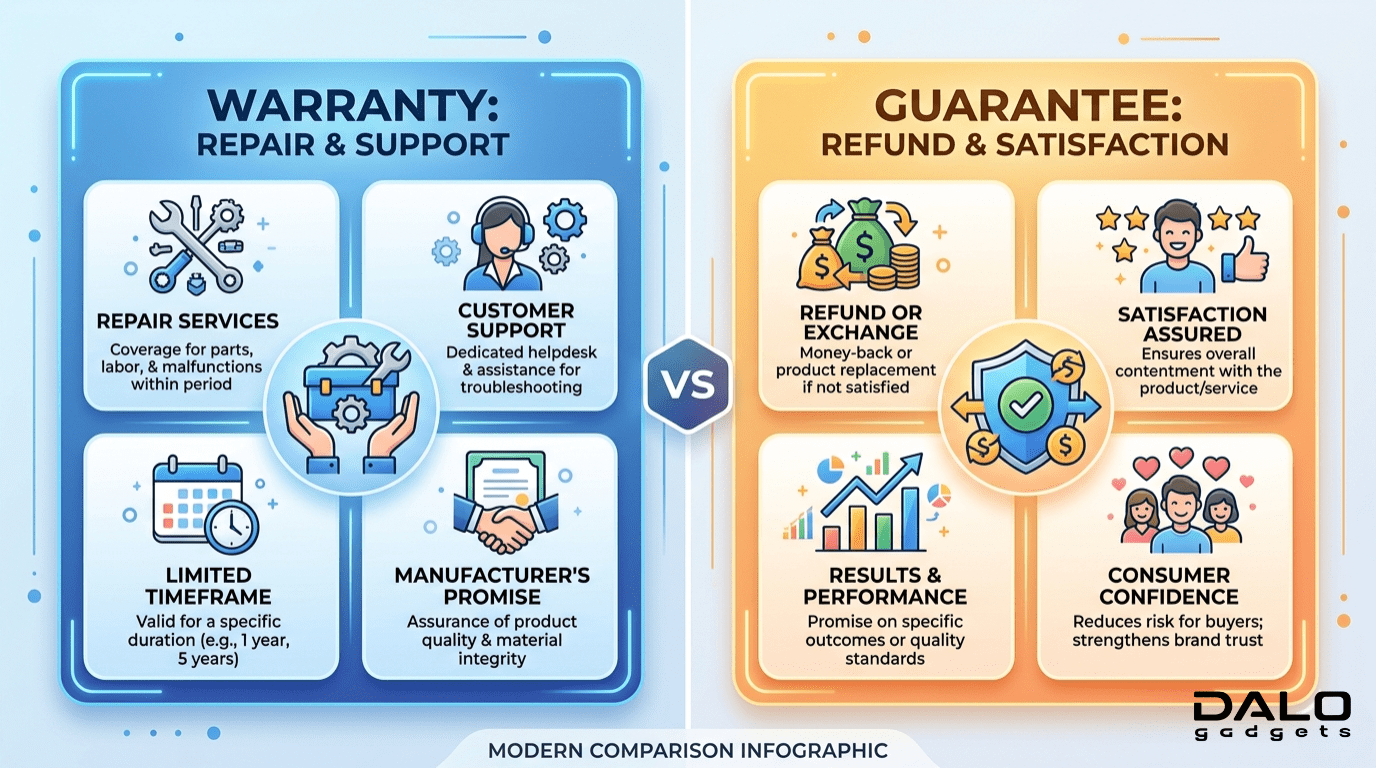
When you are going to buy electronics, appliances, or even simple gadgets, you often see the terms warranty and guarantee printed on the product box or in the description. Many of you think they mean the same thing, but they are actually different promises made by company or sellers.
Understanding the difference between warranty vs guarantee can help you make smarter buying decisions, which saves your money, and avoid disappointment if a product damages.
In this complete guide, we’ll try to explain what warranty and guarantee mean, their history, types, examples, advantages, disadvantages, and how to check them before buying a product.
What Is Warranty and Guarantee?
What Is a Warranty?
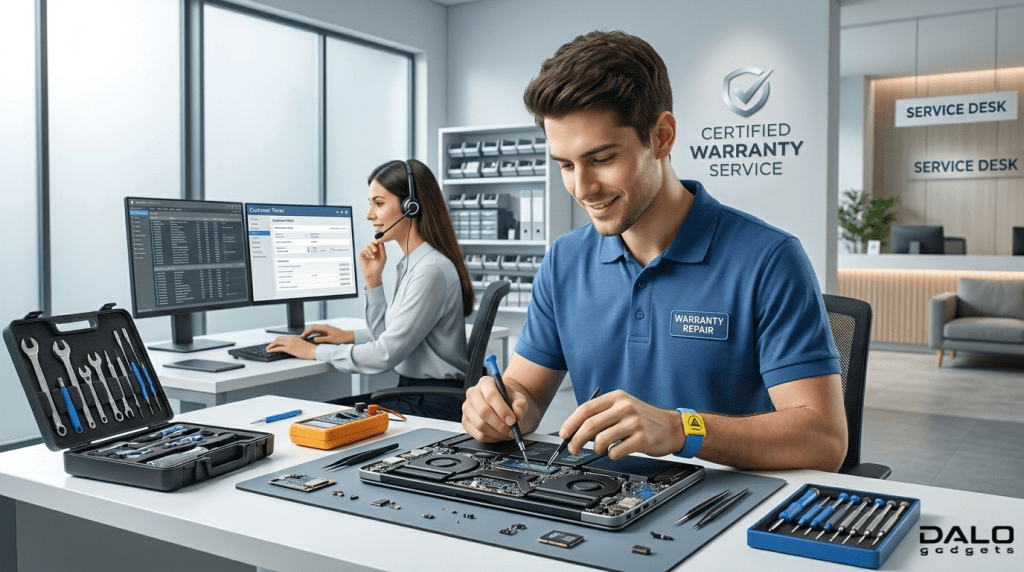
A warranty is a written promise from the company or seller that the product will work properly for a specific period of time.
If the product develops a problem during the warranty period, the company may:
- Repair the product
- Replace faulty parts
- Replace the product
- Provide service support
For example:
A laptop with a 1-year warranty means the company will repair defects within one year after purchase.
Key Points About Warranty
- Usually longer-term protection
- Often covers manufacturing defects
- May include repair or replacement
- Usually comes with terms and conditions
What Is a Guarantee?
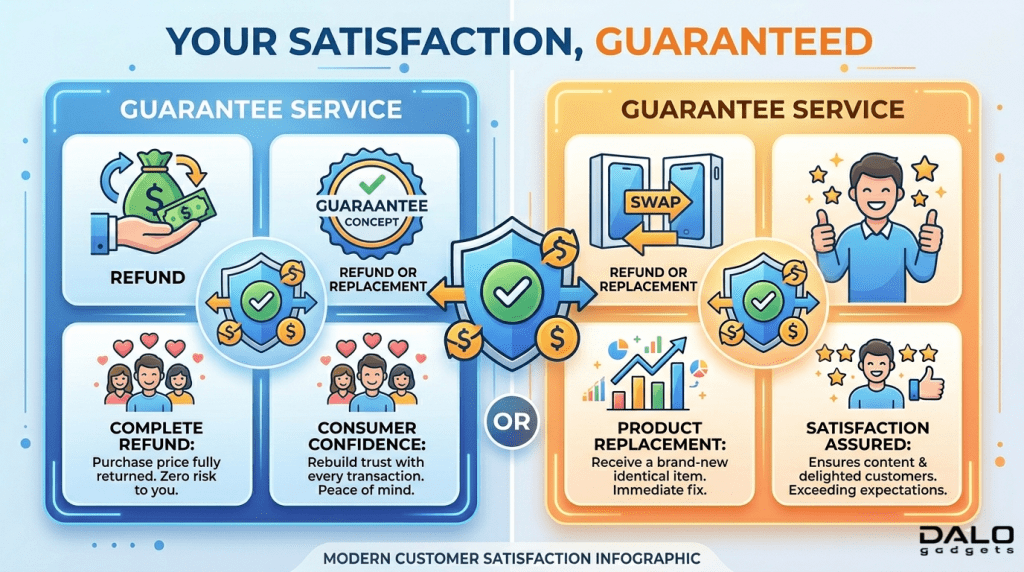
A guarantee is a promise that a product will meet certain quality standards or deliver expected results. If it fails, the seller usually offers a refund or replacement.
Guarantees are typically short-term or satisfaction-based promises.
Example:
A company may offer a 30-day money-back guarantee if you are not satisfied with the product.
Key Points About Guarantee
- Focuses on customer satisfaction
- Often short-term
- May provide full refund
- Usually simpler than warranties
The History and Background of Warranty and Guarantee
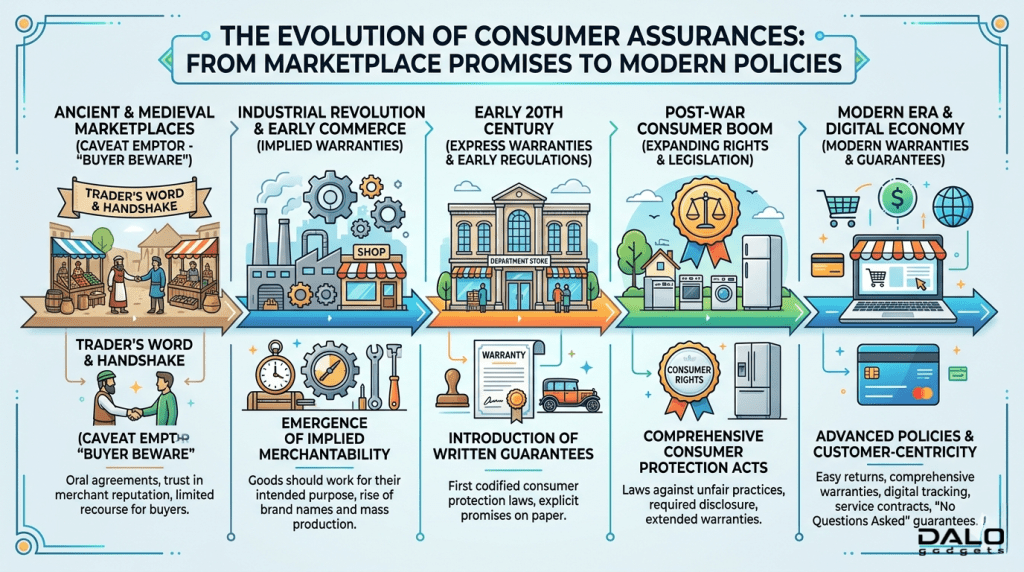
The concepts of warranty and guarantee have existed for hundreds of years in trade and commerce.
Early Trade Practices
In ancient markets, merchants promised buyers that their goods were genuine. These promises were early forms of product guarantees.
Industrial Revolution
During the Industrial Revolution (18th-19th century), mass production increased product defects. Companies started offering formal warranties to build trust with customers.
Modern Consumer Protection
Today, many countries have consumer protection laws that require businesses to provide warranties or honor guarantees.
Examples include:
- Product replacement policies
- company service commitments
- Extended warranty programs
These policies help protect buyers from defective or poor-quality products.
Types, Examples, and Uses of Warranty and Guarantee Understanding different types can help you evaluate products better.
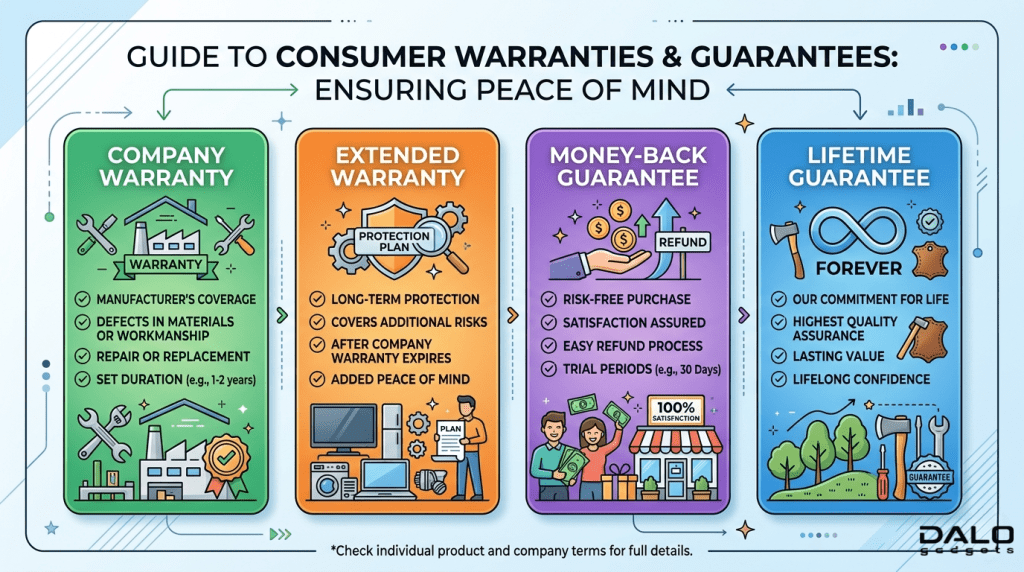
Types of Warranties
1. Company Warranty
Provided by the product company.
Example:
A smartphone with a 1-year company warranty.
2. Extended Warranty
Extra protection is purchased after the original warranty expires.
Example:
Buying an additional 2-year protection plan for a laptop.
3. Implied Warranty
Automatically provided by law even if not written.
Example:
A phone should function as expected when purchased.
4. Limited Warranty
Covers specific parts or conditions only.
Example:
A battery may have a 6-month warranty, while the device has a 1-year warranty.
Types of Guarantees
1. Money-Back Guarantee
Refund if the customer is not satisfied.
2. Lifetime Guarantee
The product will be replaced or repaired for life.
3. Satisfaction Guarantee
Ensures customer happiness with the product.
4. Performance Guarantee
Product will meet specific performance standards.
7 Powerful Differences Between Warranty and Guarantee
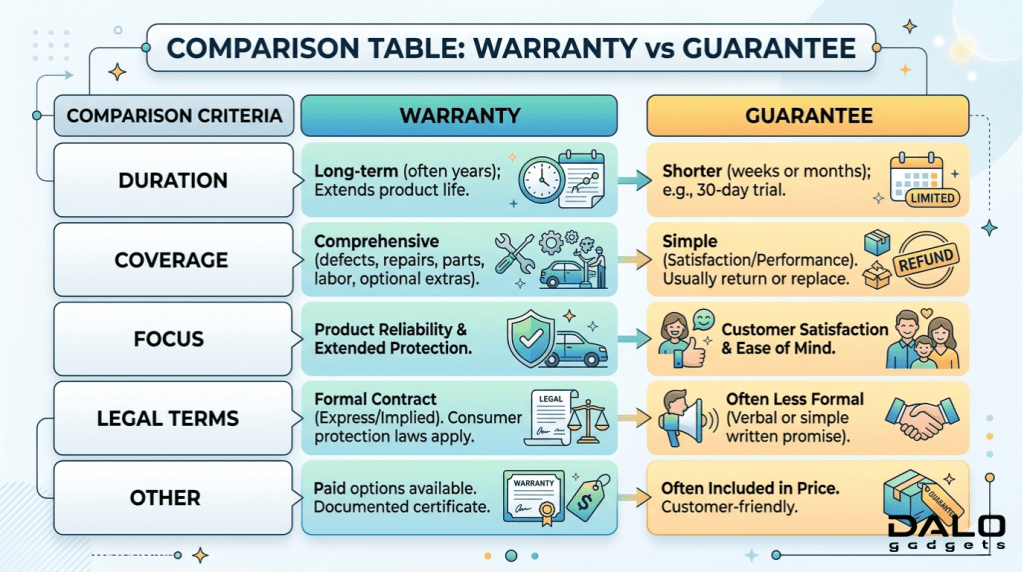
| Feature | Warranty | Guarantee |
| Definition | Promise to repair or replace defects | Promise of product quality or satisfaction |
| Duration | Usually longer | Usually shorter |
| Focus | Product performance | Customer satisfaction |
| Coverage | Repairs, parts replacement | Refund or replacement |
| Complexity | Repairs, parts replacement | Refund or replacement |
| Complexity | Includes detailed terms | Usually simpler |
| Provider | company or selle | Mostly seller or brand |
| Legal Strength | Often legally binding | Sometimes marketing promise |
Top 5 Products That Commonly Offer Warranty or Guarantee

Many tech products rely heavily on warranty policies.
1. Smartphones
Most smartphones offer 1-2 years warranty covering manufacturing defects.
Example brands include Apple, Samsung, and Xiaomi.
2. Wireless Earbuds
Earbuds often include 6-12 months warranty for battery and hardware issues.
3. Laptops
Laptop warranties typically cover:
- Hardware issues
- Keyboard failures
- Display defects
Usually 1 year standard warranty.
4. Home Appliances
Products like refrigerators, washing machines, and air conditioners often include:
- 1 year general warranty
- 5-10 years compressor warranty
5. Smartwatches and Wearables
Fitness trackers and smartwatches commonly offer 1 year warranty.
Advantages and Disadvantages of Warranty and Guarantee
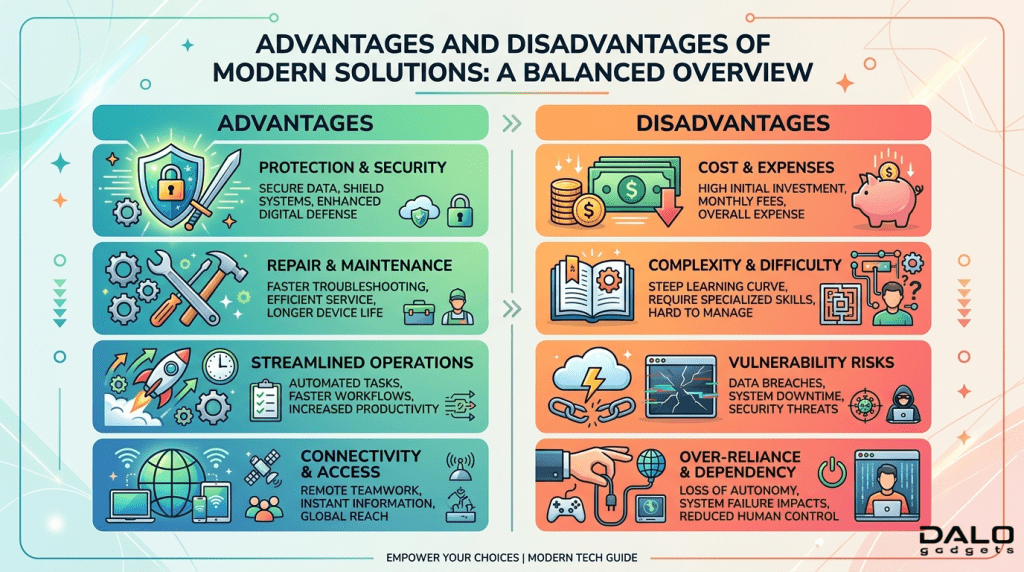
Advantages
1. Buyer Protection
Customers feel safer purchasing expensive products.
2. Product Reliability
companies improve quality to reduce warranty claims.
3. Customer Trust
Guarantees build brand reputation.
4. Long-Term Support
Warranty services help extend product life.
Disadvantages
1. Limited Coverage
Some warranties exclude accidental damage.
2. Complicated Terms
Fine print may confuse buyers.
3. Claim Process
Warranty claims can sometimes be slow.
4. Extra Costs
Extended warranties may increase the total purchase cost.
Why Warranty and Guarantee Are Important

Understanding warranty and guarantee is important because they:
Protect Your Investment
Electronics and gadgets can be expensive.
Improve Buyer Confidence
Consumers feel safer buying products with protection.
Reduce Financial Risk
Repairs or replacements may be covered.
Encourage Product Quality
Brands maintain quality to avoid warranty claims.
For tech buyers and reviewers, checking warranty policies is a critical step before recommending products.
Buying Guide: What You Must Check Before Buying
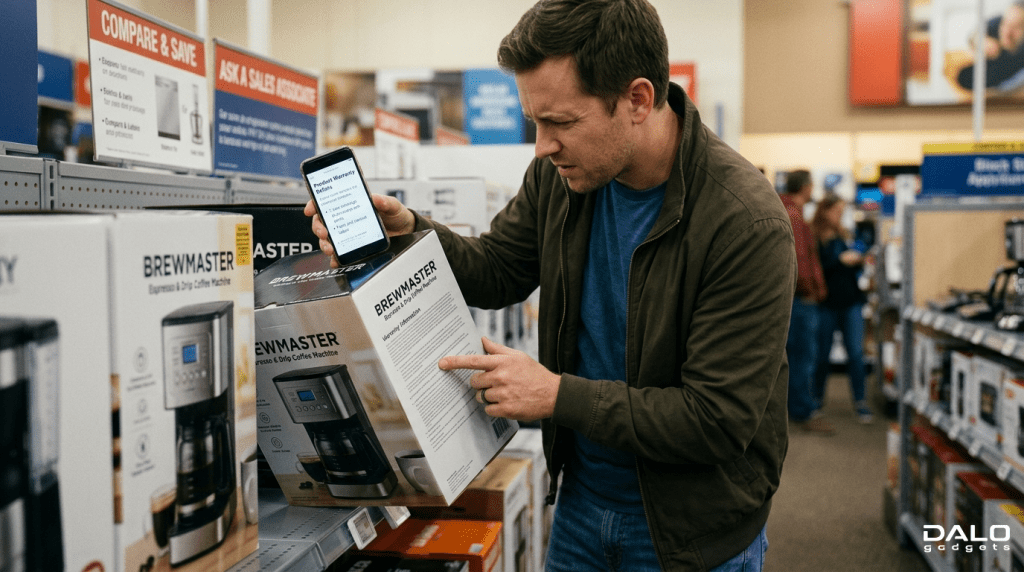
Before purchasing any tech product, carefully review the warranty or guarantee policy.
1. Check Warranty Duration
Look for at least 1 year warranty on electronics.
2. Understand What Is Covered
Common coverage includes:
- Manufacturing defects
- Hardware failures
- Component issues
Usually not covered:
- Physical damage
- Water damage
- Misuse
3. Verify Service Centers
Check whether the brand has authorized service centers in your country or region.
4. Read the Fine Print
Important details may include:
- Claim procedures
- Replacement rules
- Warranty limitations
5. Register the Product
Some companies require online product registration to activate the warranty.
6. Keep Purchase Proof
Always keep:
- Invoice
- Warranty card
- Online receipt
Without proof, warranty claims may be rejected.
Conclusion
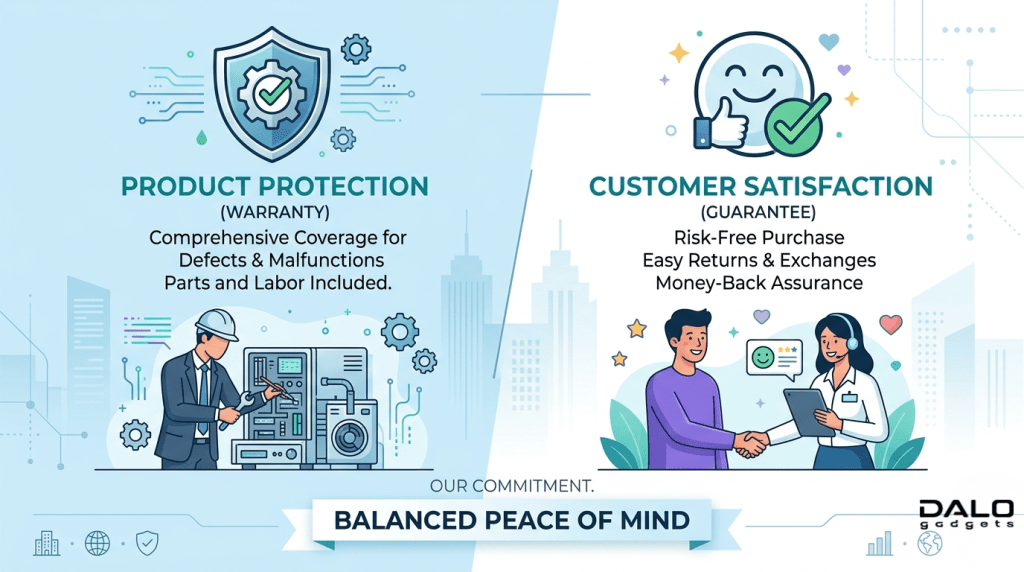
Understanding what warranty and guarantee mean can help you become a smarter buyer.
A warranty mainly focuses on repairing or replacing defective products for a certain period, while a guarantee focuses on ensuring customer satisfaction and product quality.
Before buying any product, especially electronics like smartphones, earbuds, laptops, or appliances, always check:
- Warranty duration
- Coverage details
- Service availability
- Refund or replacement policies
These protections can save you money, reduce risk, and improve your overall buying experience.
In simple terms:
- Warranty protects the product
- Guarantee protects the customer
Knowing the 7 powerful differences between warranty and guarantee ensures you make confident and informed purchasing decisions every time.
FAQ: Warranty vs Guarantee
1. Which is better, a warranty or a guarantee?
Both are useful. Warranty offers long-term repair support, while guarantee ensures satisfaction or refund.
2. Is warranty legally binding?
Yes. Most warranties are legal commitments from the company.
3. Can a product have both warranty and guarantee?
Yes. Many products offer a satisfaction guarantee and a warranty.
4. Does warranty cover accidental damage?
Usually no, unless you purchase additional protection plans.
5. What happens if warranty expires?
You must pay for repairs yourself unless you purchased extended warranty coverage.