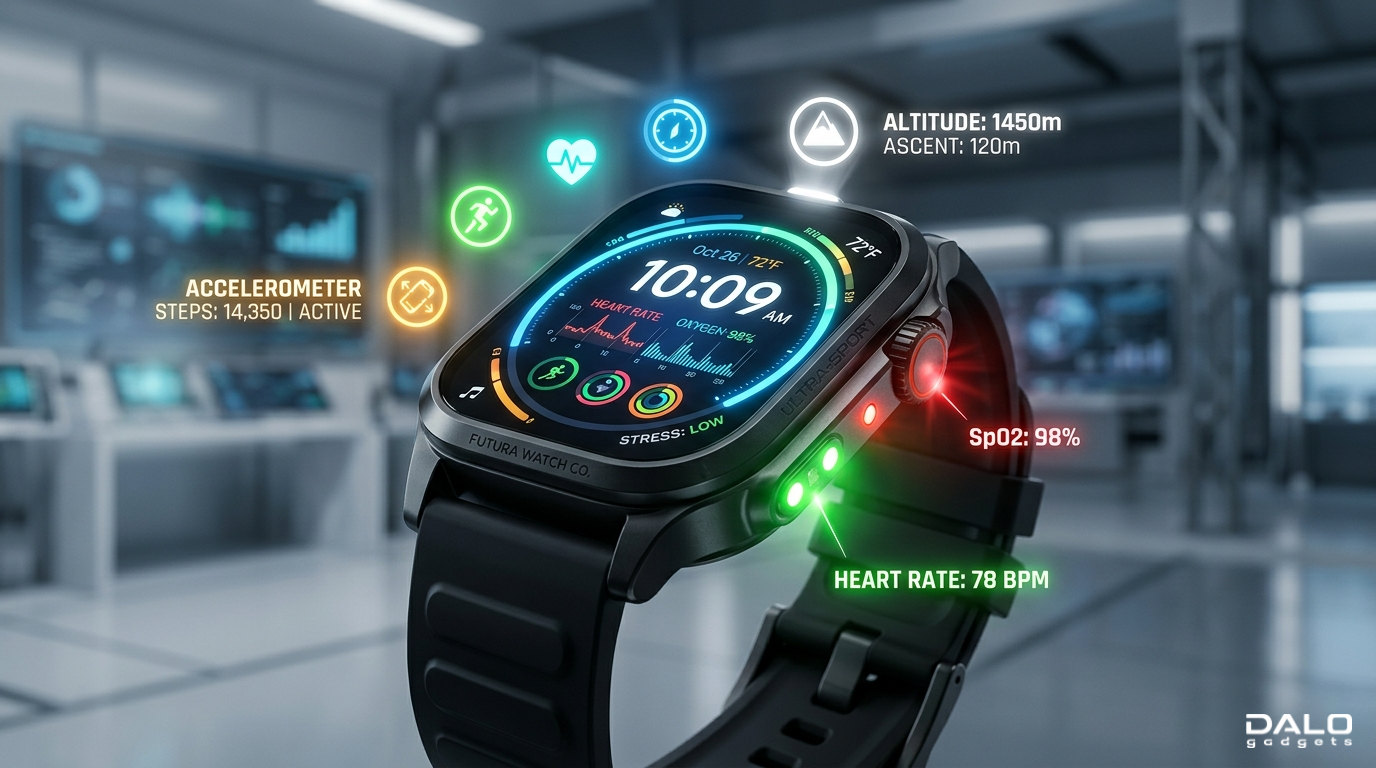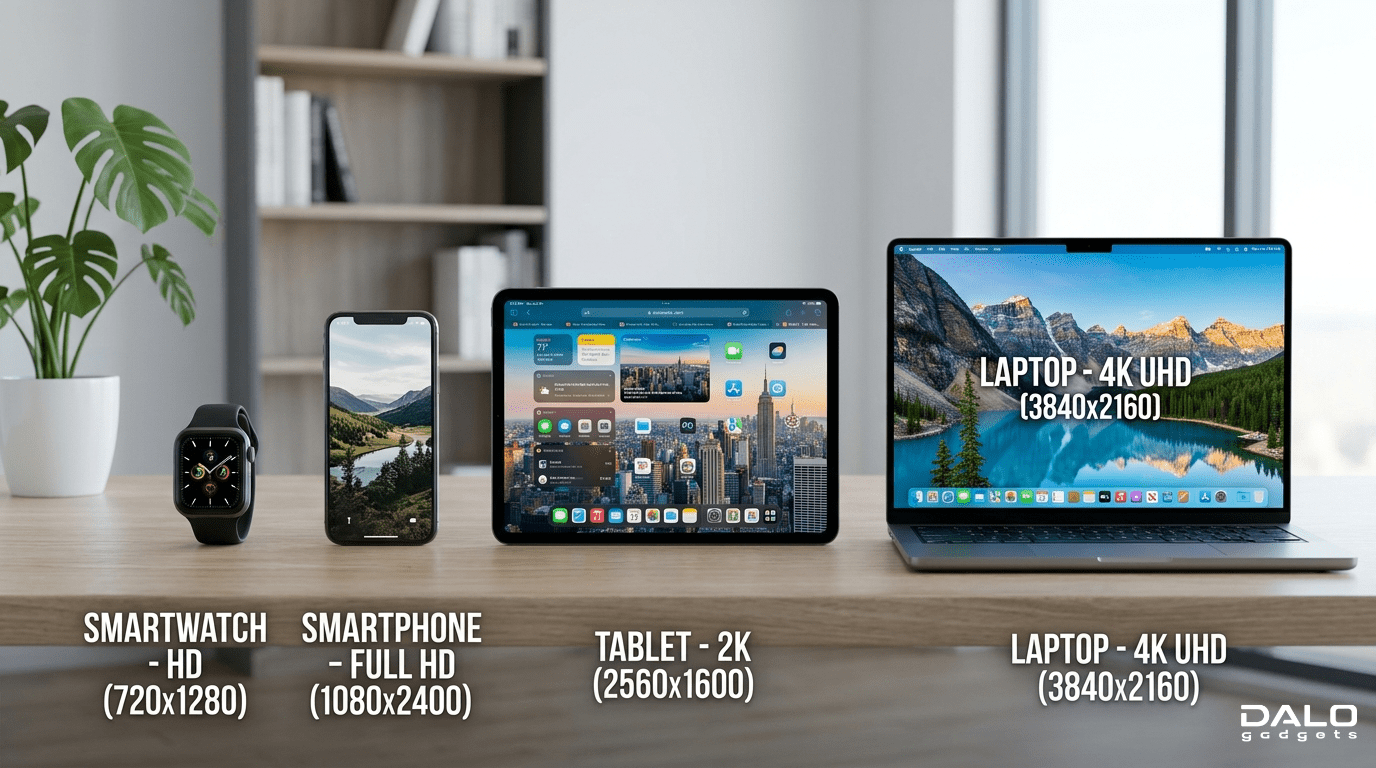
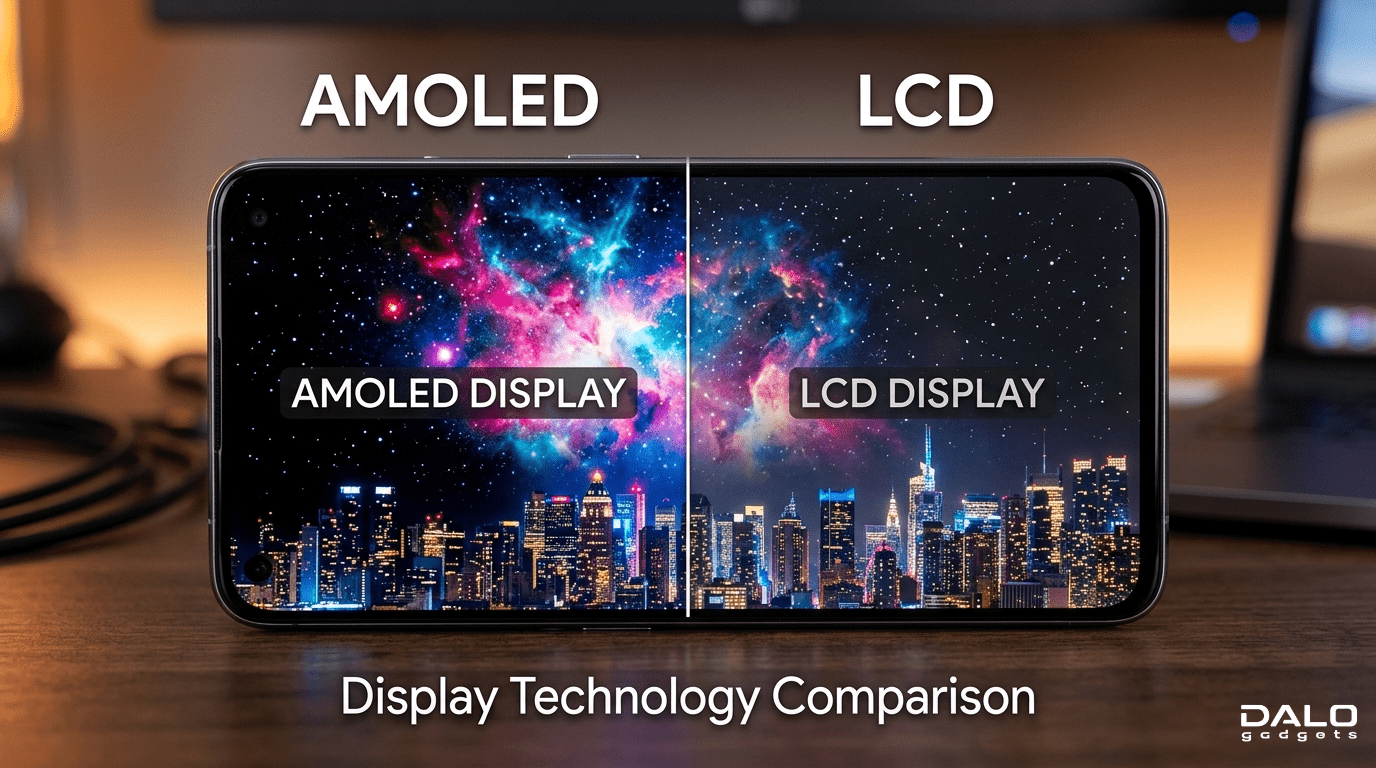
AMOLED Display vs HD LCD Display, when buying a smartphone or smartwatch, display quality is one of the biggest factors that shapes your daily experience. Whether you’re scrolling social media, tracking fitness, or watching videos, the screen is where everything happens.
Two common display technologies dominate the market:
- AMOLED (Active Matrix Organic Light Emitting Diode)
- HD LCD (Liquid Crystal Display)
But which one is better? And more importantly, which one is better for you?
What Is AMOLED and HD LCD?
What Is AMOLED Display?
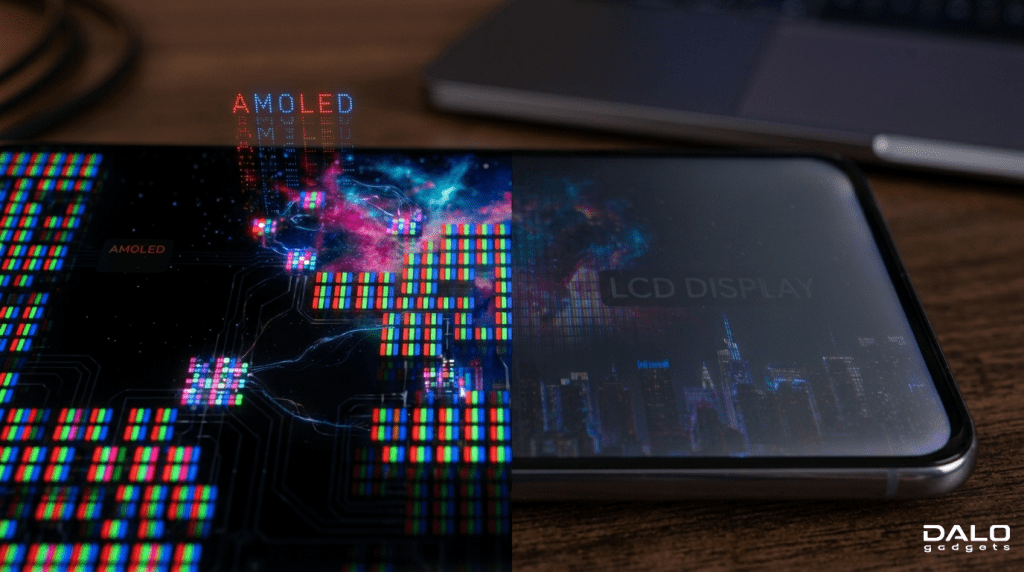
AMOLED stands for Active Matrix Organic Light Emitting Diode. Each pixel produces its own light, meaning there’s no need for a backlight.
Key Traits:
- True blacks (pixels turn off completely)
- High contrast ratios
- Vibrant colors
- Thinner panels
What Is HD LCD Display?
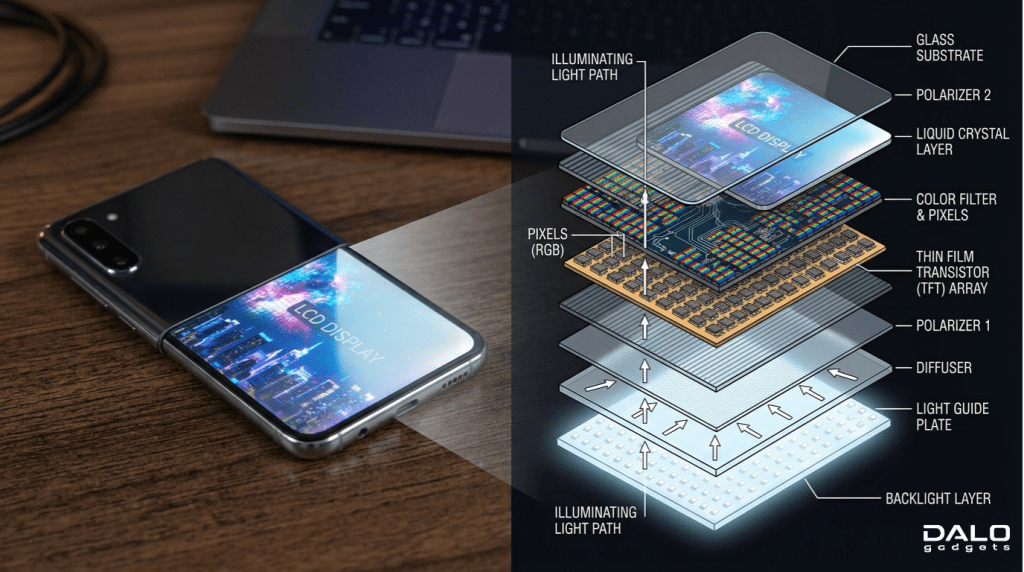
HD LCD stands for High Definition Liquid Crystal Display. It uses a backlight to illuminate pixels.
Key Traits:
- Consistent brightness
- Natural color reproduction
- Generally cheaper
- Slightly thicker design
AMOLED Display vs HD LCD Display History & Background
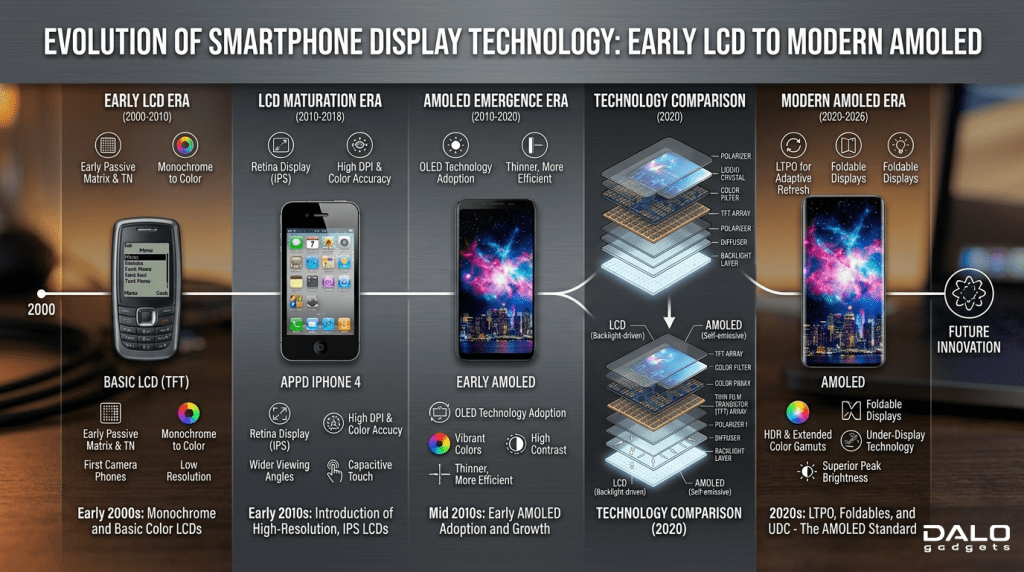
LCD technology has been around since the early days of flat screens and became mainstream in phones during the 2000s.
AMOLED is newer and evolved from OLED technology, gaining popularity when brands like Samsung Electronics started using it heavily in flagship devices.
Over time:
- LCD dominated budget and mid-range devices
- AMOLED became the premium standard in high-end smartphones and smartwatches
Today, both coexist depending on price and purpose.
Types, Examples & Usage of AMOLED Display and HD LCD Display
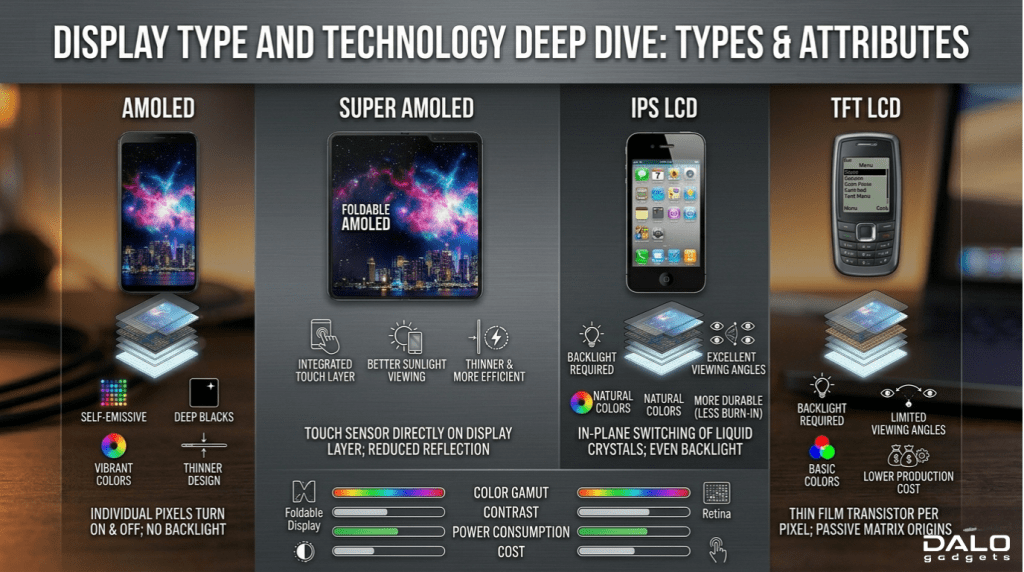
Types of AMOLED Displays
- Standard AMOLED
- Super AMOLED (improved brightness & touch integration)
- Dynamic AMOLED (HDR support)
Types of LCD Displays
- TFT LCD (basic)
- IPS LCD (better viewing angles)
- Retina LCD (high pixel density, used by Apple Inc.)
Real-World Usage
AMOLED is commonly used in:
- Flagship smartphones
- Premium smartwatches
- Always-On displays
HD LCD is used in:
- Budget smartphones
- Entry-level smartwatches
- Devices focused on cost efficiency
Top 5 Devices (AMOLED vs HD LCD)
AMOLED Display Devices
- Samsung Galaxy S24
- iPhone 15 Pro
- Samsung Galaxy Watch 6
HD LCD Devices
- Redmi 13C
- Realme Narzo 60A
7 Eye-Opening Differences
1. Display Quality & Colors
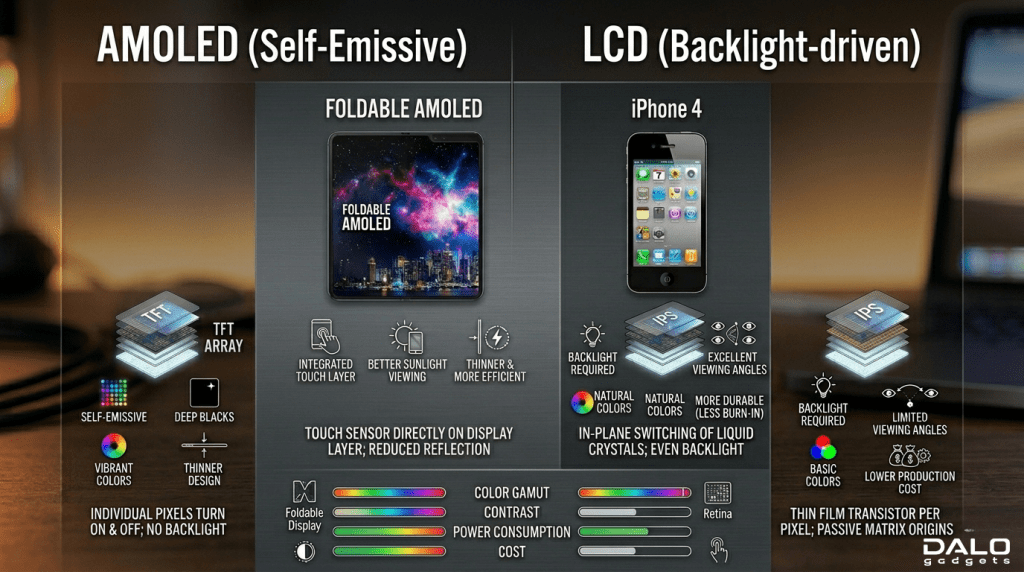
AMOLED screens are more vibrant and saturated, while LCD offers more natural tones.
If you love punchy visuals, AMOLED wins.
2. Black Levels
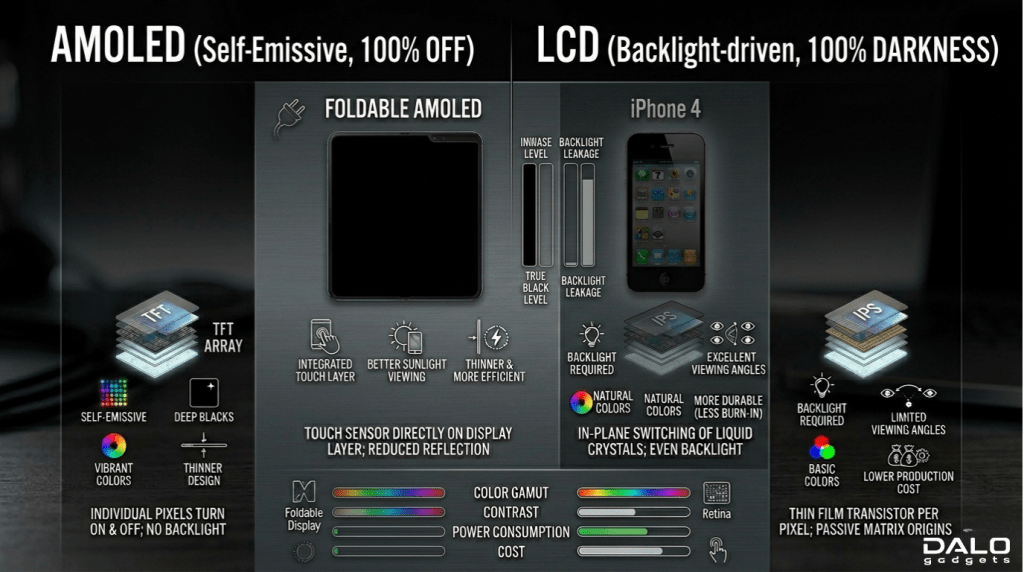
AMOLED delivers true black because pixels turn off completely. LCD shows dark gray instead.
This is the biggest visual difference.
3. Battery Efficiency
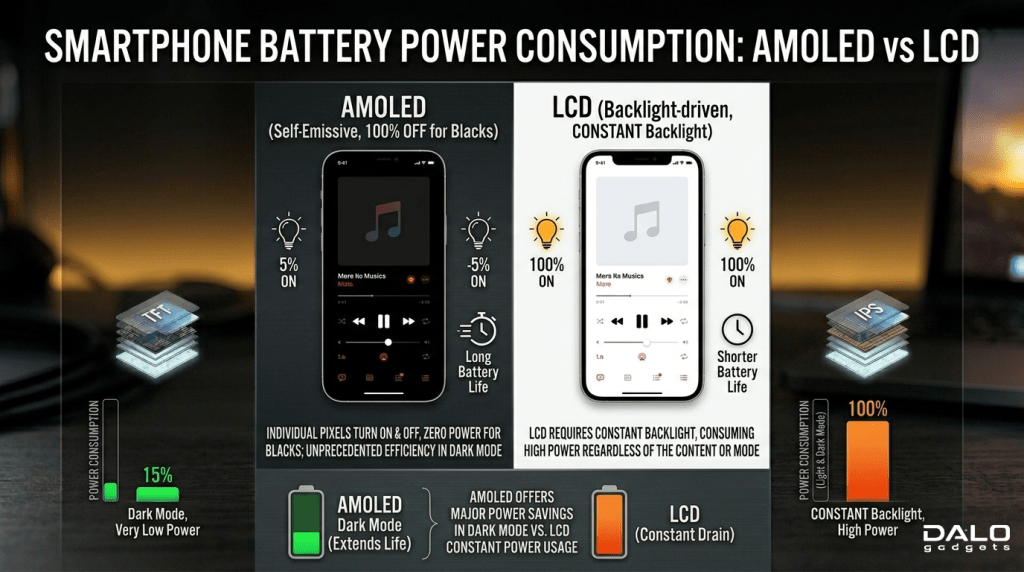
AMOLED saves battery when displaying dark content. LCD consumes constant power due to the backlight.
Dark mode = big advantage for AMOLED.
4. Brightness & Outdoor Visibility
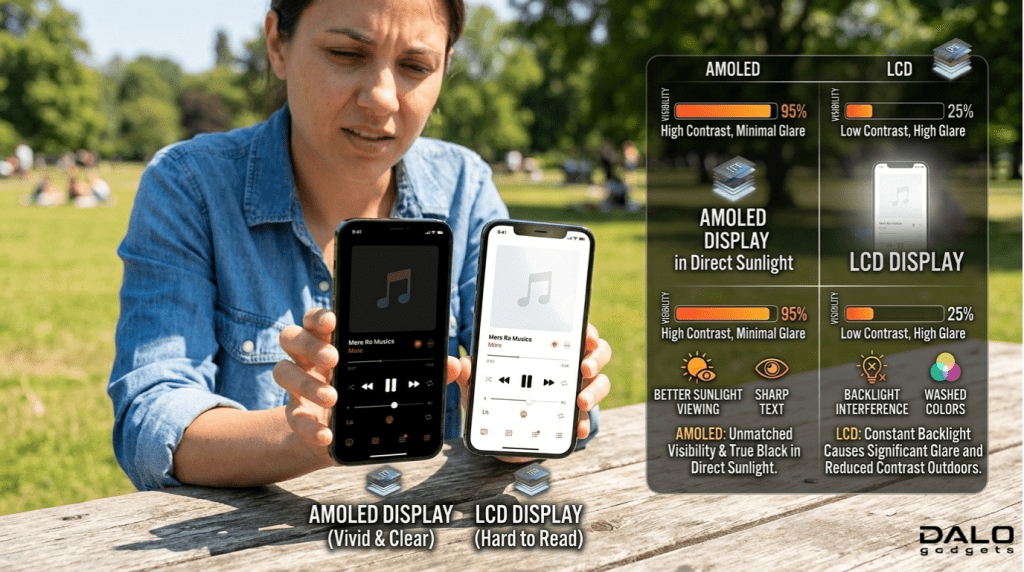
LCD can sometimes get brighter in direct sunlight, especially budget AMOLED panels.
High-end AMOLED beats LCD, but low-end AMOLED may not.
5. Thickness & Design
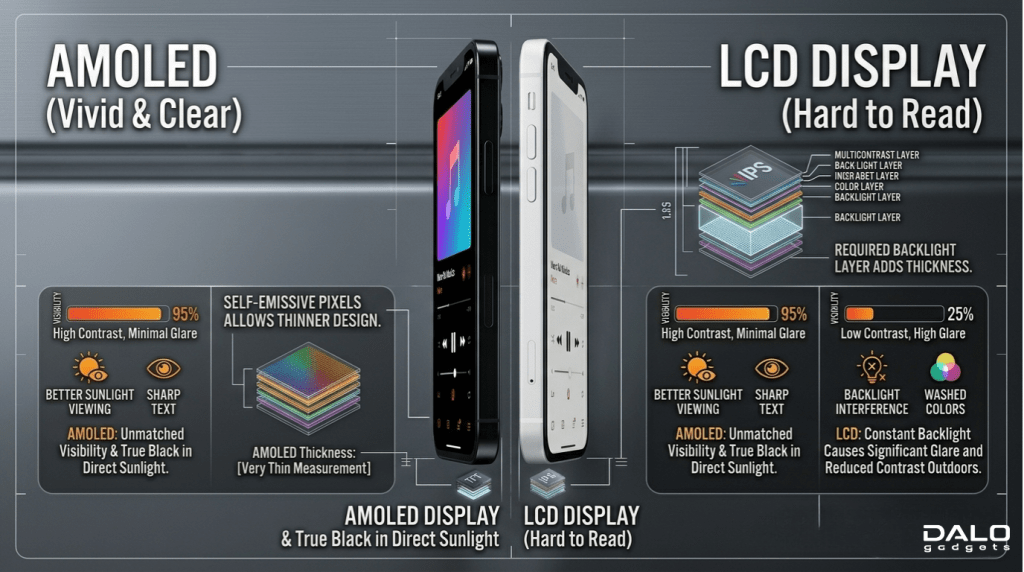
AMOLED panels are thinner, allowing:
- Slim phones
- Curved displays
LCD devices are usually slightly thicker.
6. Durability & Burn-In
AMOLED can suffer from burn-in over time. LCD doesn’t have this issue.
Long-term static usage (like smartwatch faces) matters here.
7. Price Difference
LCD is cheaper to manufacture, making it common in budget devices.
AMOLED = premium pricing.
Advantages and Disadvantages
AMOLED Pros
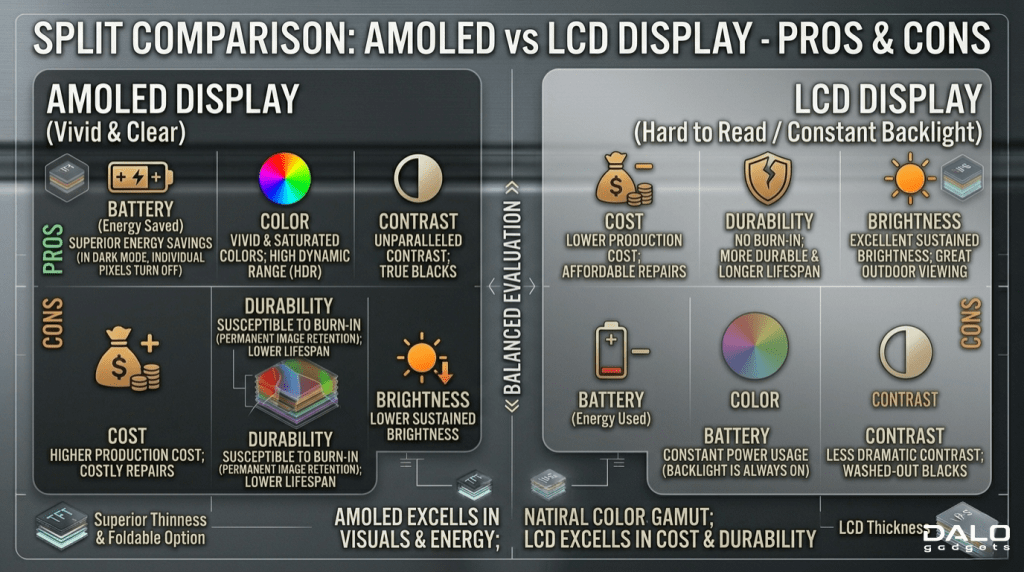
- Stunning colors
- True black levels
- Better for media consumption
- Energy efficient with dark mode
AMOLED Cons
- Expensive
- Risk of burn-in
- Color accuracy can be oversaturated
HD LCD Pros
- Affordable
- No burn-in issues
- Better natural color accuracy
- Good brightness consistency
HD LCD Cons
- No true black
- Lower contrast
- Thicker design
- Less premium feel
Buying Guide (What You Must Know)
1. Choose Based on Usage
- Entertainment & gaming – AMOLED
- Basic use & budget – LCD
2. Check Display Resolution
Even AMOLED can look bad if the resolution is low. Look for:
- Full HD+ or higher for phones
- High pixel density for smartwatches
3. Always-On Display Needs
Smartwatches benefit more from AMOLED because:
- It only lights the necessary pixels
- Saves battery in standby
4. Outdoor Use
If you work outdoors:
- Look for high brightness (nits)
- Don’t assume AMOLED is always better
5. Long-Term Usage
If you keep devices for years:
- LCD is safer (no burn-in)
- AMOLED needs proper care (avoid static images)
6. Budget Matters
- Under budget range – LCD is still solid
- Mid to premium – AMOLED is worth it
What You Should Do / Avoid
Do:
- Enable dark mode on AMOLED
- Check brightness ratings before buying
- Compare side-by-side in-store
Don’t:
- Assume AMOLED is always better
- Ignore resolution and refresh rate
- Buy based only on marketing terms
Conclusion of AMOLED Display vs HD LCD Display
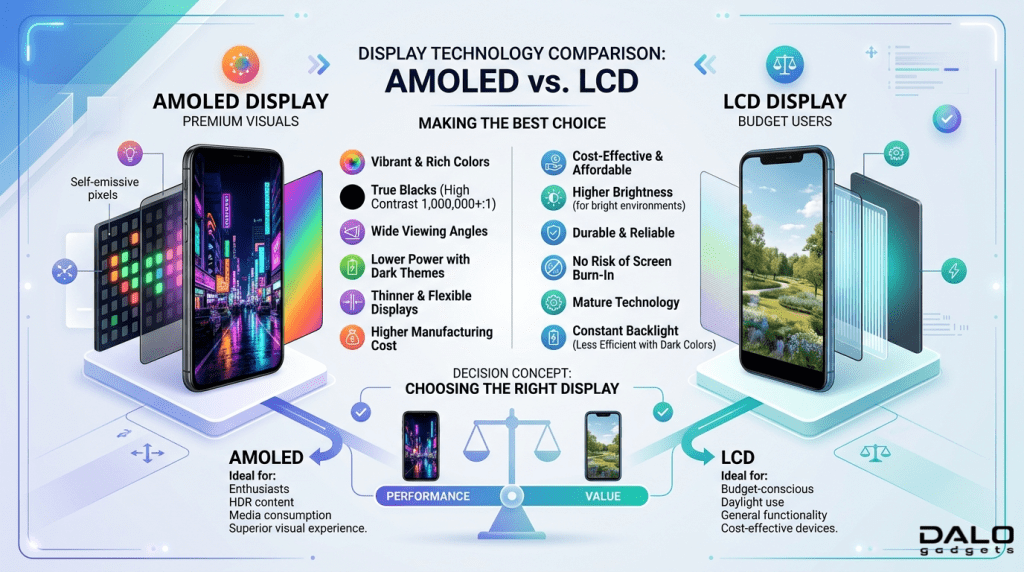
AMOLED and HD LCD displays both have their place; it’s not about which is universally better, but which suits your needs.
- Choose AMOLED if you want premium visuals, deeper blacks, and better media experience.
- Choose HD LCD if you want affordability, reliability, and natural color tones.
For smartphones and smartwatches in 2026, AMOLED is clearly leading the premium segment, but LCD still offers excellent value where it matters most.
FAQ Section
Is AMOLED better than HD LCD?
Yes, in most cases, especially for visuals and contrast. But LCD is still better for budget and longevity.
Does AMOLED save battery?
Yes, especially when using dark mode or black backgrounds.
Is burn-in a serious issue?
Not for most users. It happens after long-term static usage, but modern devices reduce this risk.
Which is better for smartwatches?
AMOLED is generally better due to Always-On display and power efficiency.
Is LCD outdated?
No. LCD is still widely used and reliable, especially in affordable devices.