Our smartphones have become an important part of our life. From work to communication, entertainment to shopping, we depend on our phones constantly. But heavy usage brings one common problem: the battery drains very quickly. This is where fast charging technologies come in.
If you’ve ever seen or heard terms like Fast Charging, Quick Charge, VOOC, Rapid Charging, Super-Fast Charging, Dash Charging, or Dart Charging on mobile phone ads and a phone box, you might wonder what they mean. Are they different? Which one is better? And how do they work on mobile batteries?
We are here to explain everything in a simple and practical way and guide you before buying a smartphone.
What Is Fast Charging?
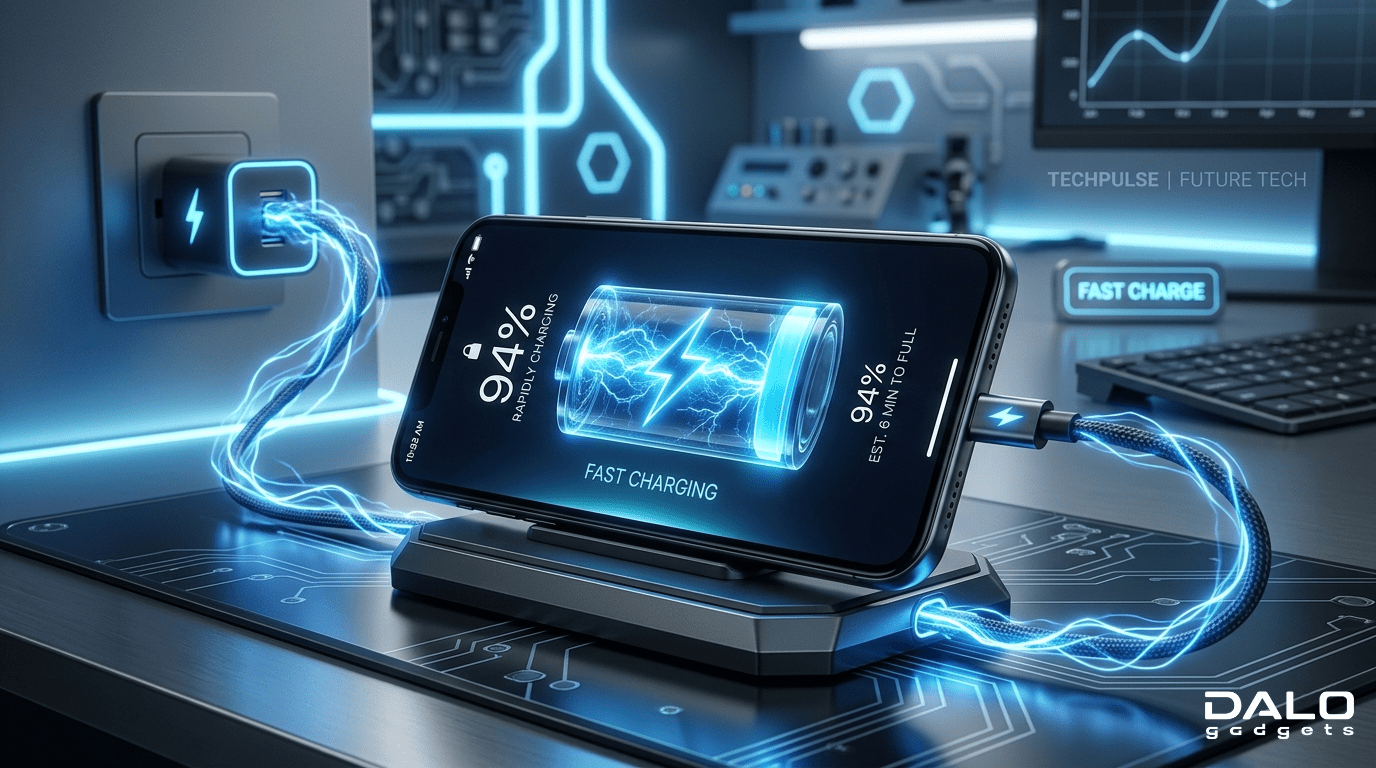
Fast charging is a technology that allows a smartphone to charge much faster than standard charging.
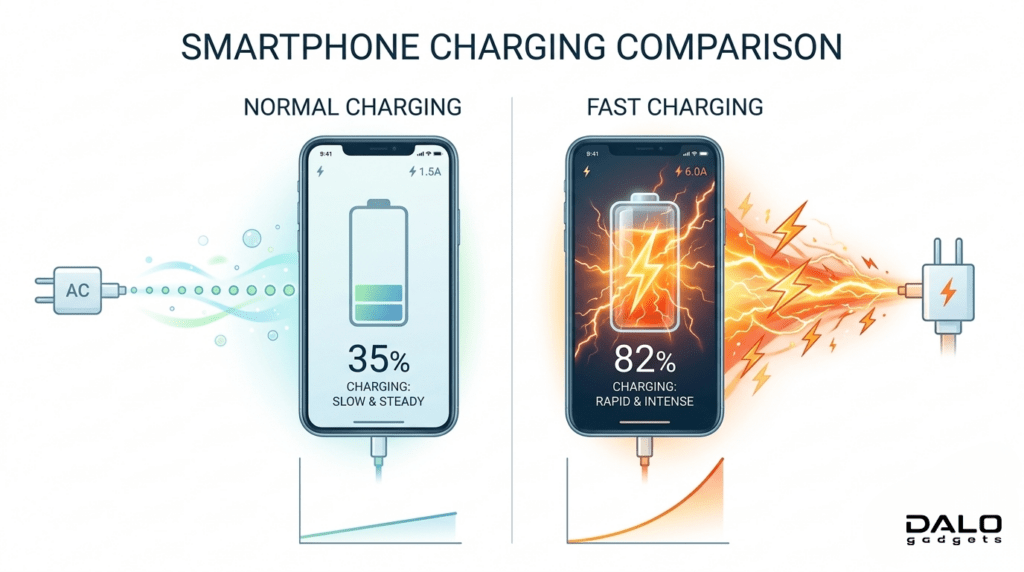
Traditional phone chargers deliver about 5W (5 V × 1 A). It may take 3-4 hours to fully charge a phone. Fast charging technology increases the charging speed of the phone, which reduces the charging time significantly.
For example:
| Charging Type | Typical Power | Charging Speed |
| Normal Charging | Super Fast Charging | 3-4 hours |
| Fast Charging | 10-18W | 1.5-2 hours |
| Super Fast Charging | 25-120W | 15-60 minutes |
With modern fast charging technologies, some smartphones can charge 50% in just 15 minutes.
Fast charging works by optimizing three main things:
- Voltage
- Current
- Temperature management
Smartphones and chargers communicate with each other to determine the safest and fastest charging speed.
History and Background of Fast Charging
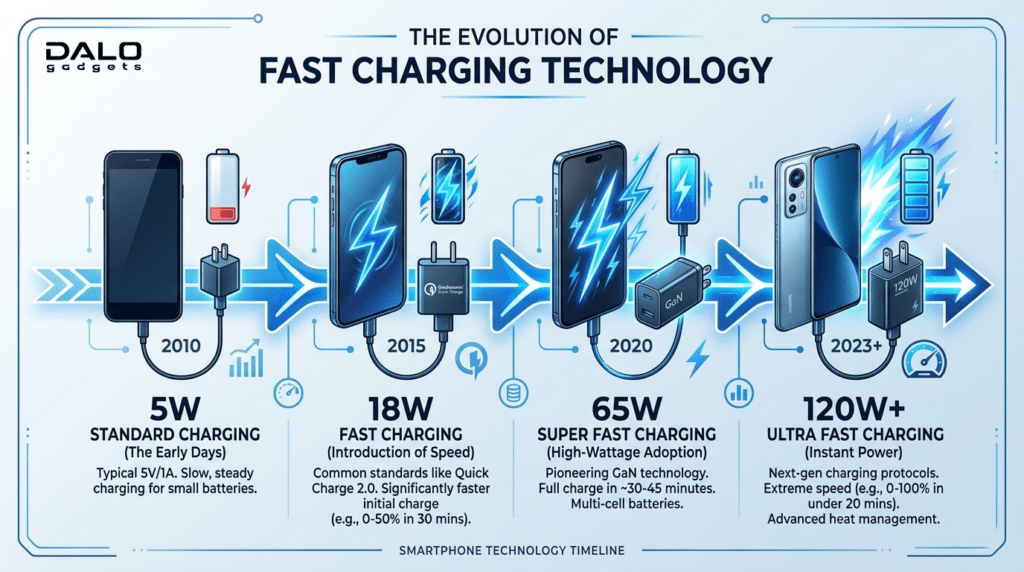
Fast charging did not start suddenly. It developed slowly as smartphone batteries became bigger from 1200 mAh to 5000mAh.
Old smartphone charging
Between 2010 and 2013, most smartphones used basic 5W chargers, which took hours to charge; users had to leave their phones plugged in overnight.
First fast charging technology
In 2013, Qualcomm company introduced Quick Charge, one of the first fast-changing technologies. It helped phones charge faster by increasing the voltage.
Soon, other smartphone companies started developing their own fast charging systems:
- VOOC charging
- Dash charging
- Super Fast Charging
- Dart charging
- Super Vooc Charging soon
Each company developed the fast-charging technology in its own unique way.
Ultra-fast charging era
Today, we hear that the new flagship smartphones can charge at 65W, 100W, or even 200W, which means a phone can fully charge in just 30 minutes.
Types of Fast Charging Technologies
Different phone brands use their own fast charging technologies. Let’s break down the most common ones.
Quick Charge
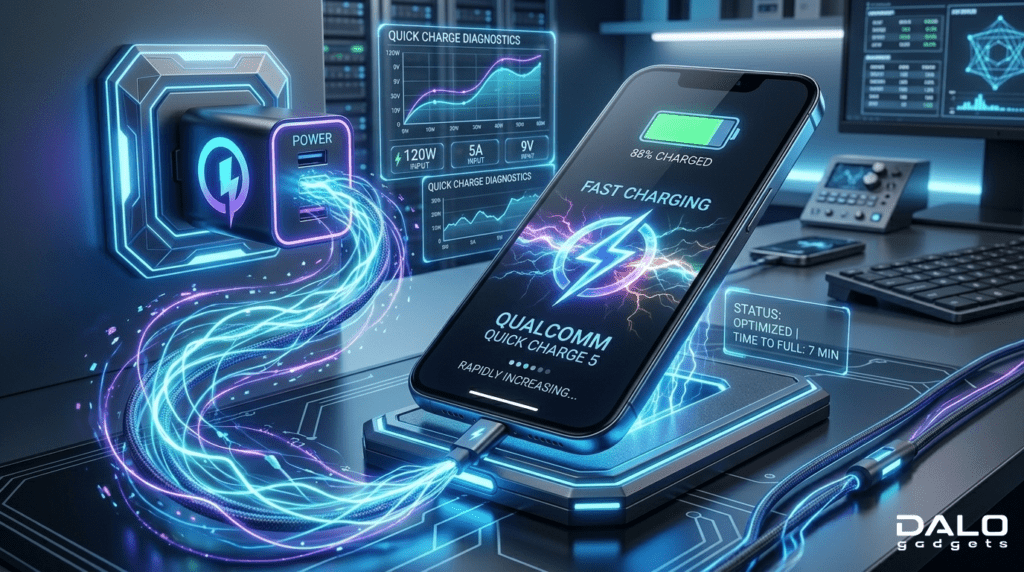
The Quick Charge (QC) is developed by Qualcomm and is widely used in Android smartphones and their chargers. Have you ever noticed in chargers QC 3.0 or 2.0?
The QC technology works by increasing voltage while controlling heat and battery safety.
The common versions that we notice in our devices are:
- QC 3.0
- QC 4+
- QC 5
Quick Charge (QC) 5 can support 100W+ charging speeds.
The phones that have a Snapdragon processor often support this technology.
VOOC Charging
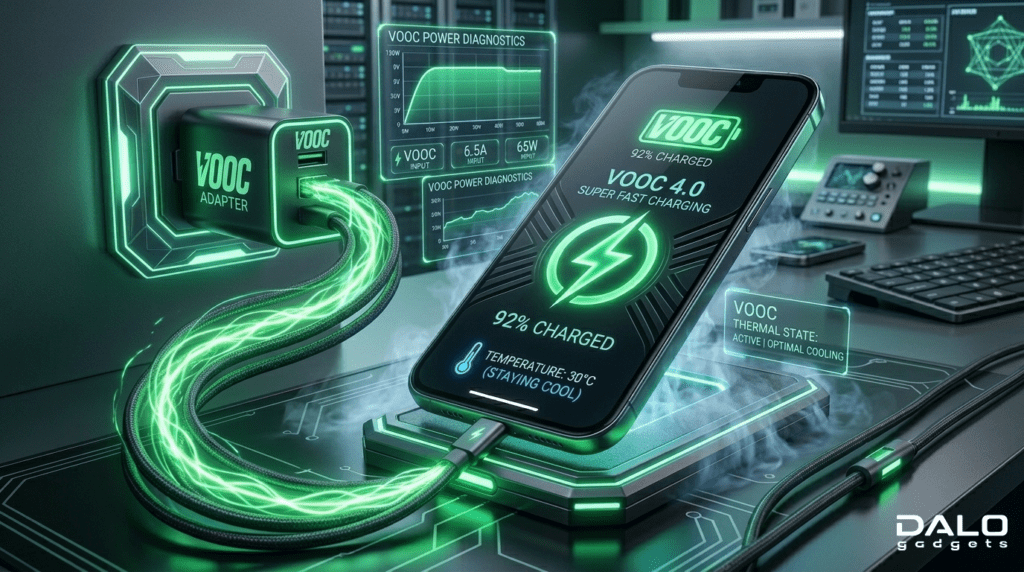
The full form of VOOC is Voltage Open Loop Multi-Step Constant-Current Charging.
This technology was developed by the Oppo smartphone company. That is why we can see VOOC charging widely on the internet, in mobile phone stores, and in mobile phone boxes.
VOOC increases current instead of increasing voltage, which helps keep the phone cooler while charging. So other smartphone companies also use this technology on their devices.
Benefits of VOOC:
- Faster charging
- Less heat
- More stable power delivery
Later versions include:
- Super VOOC
- 80W Super VOOC
- 150W Super VOOC
Dash Charging
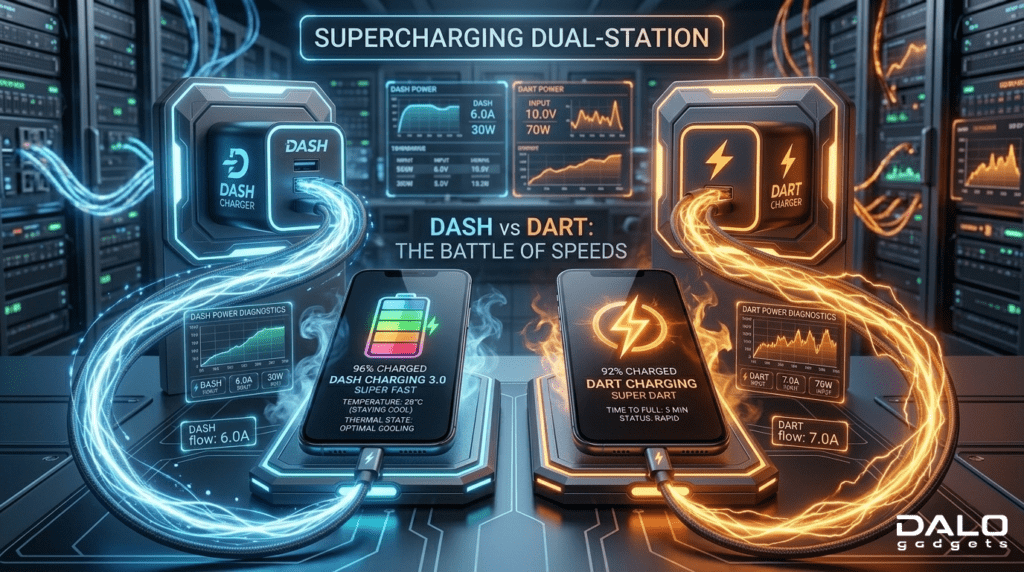
Dash Charging technology was introduced by OnePlus. It is based on VOOC technology and focuses on fast charging with lower heat generation.
OnePlus later upgraded Dash Charging to Warp Charge, which offers even faster charging speeds than oldest Dash charging.
Dart Charging
Dart Charging is used by Realme smartphones.
Dart charging technology is also based on VOOC technology and focuses on high current charging.
Dart charging supports:
- 30W Dart
- 65W Super Dart
- 150W Ultra Dart
Realme uses this technology to charge large batteries very fast.
Super-Fast Charging
Super Fast Charging is a technology used by several smartphone brands, especially Samsung.
Samsung’s super-fast charging includes:
- 25W charging
- 45W charging
These systems use USB Power Delivery (PD) standards to ensure compatibility with multiple chargers.
Why Fast Charging Is Important
Fast charging is not just a marketing feature that we think – Fast charging is important because it charges devices quickly, so we don’t have to wait a long time to use them again.
Saves time
Nowadays, we depend heavily on smartphones. So fast charging allows us to:
- Charge during short breaks
- Get hours of battery in minutes
- Avoid carrying power banks
For example:
If we charge our phone for 15 minutes, it can provide 5–7 hours of usage.
Better for busy lifestyles
We no longer need to wait hours for our phone to charge.
Enables bigger batteries
Today’s smartphones now include 5000mAh batteries or more. Without fast charging, charging these large batteries would take a very long time. So fast charging makes large batteries practical.
Top 5 Smartphones That Have Excellent Fast Charging
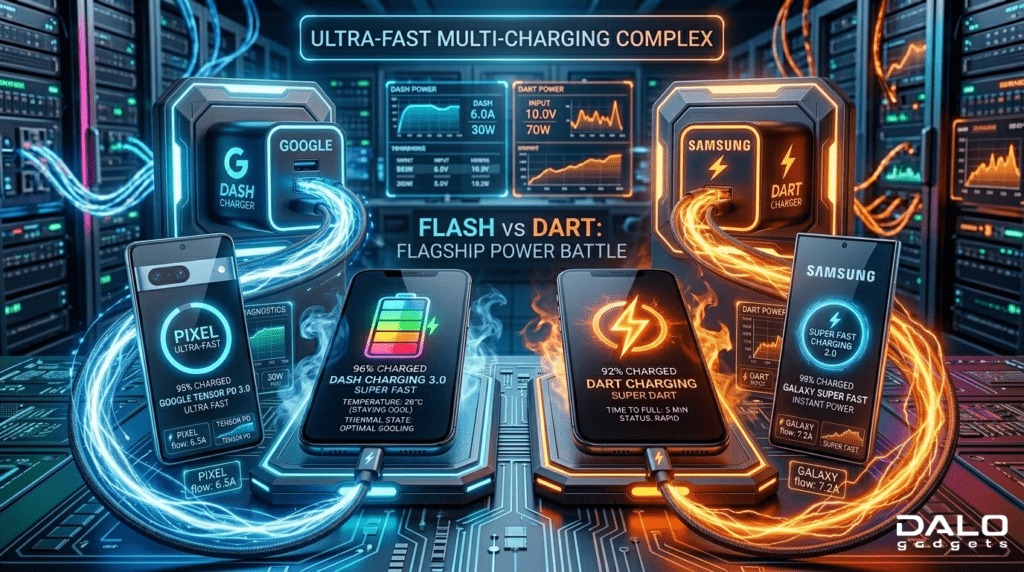
We shortlist some smartphones known for their impressive fast charging technology.
1. OnePlus New series
- 100W fast charging support.
- Full charge in around 25 minutes
- Very good at managing the battery
2. Realme GT Neo series
- 150W Ultra Dart charging
- Charges Very fast
- Best for gamers
3. Oppo Find X series
- Super VOOC charging
- One of the fastest charging systems used
4. Xiaomi 13+ series
- 120W Hypercharge technology
- Advanced heat control technology
5. Samsung Galaxy S series
- Reliable Super Fast Charging
- Uses safe USB PD charging
These phones represent some of the best fast charging technology available today.
Advantages and Disadvantages of Fast Charging
As we know, everything has positive and negative sides. Like any other technology, fast charging has advantages and disadvantages.
Advantages
We can quickly charge our phones when we need to.
Reduces downtime
Our phone spends less time connected to the charger.
Ideal for heavy users
If you are a gamer, a content creator, and a professional, it benefits you greatly.
Supports large batteries
Today’s smartphones can use bigger batteries without long charging times.
Disadvantages
Heat generation
The fast charger can create heat if you do not manage it properly.
Battery wear over time
The fast charger may slightly reduce your mobile battery lifespan.
Requires a special charger
Fast charging usually works best with the original charger and cable.
Marketing confusion
Different brands use different names, which can confuse you when purchasing a device, but after learning this article, the confusion might be solved.
Buying Guide: How to Choose a Fast-Charging Phone
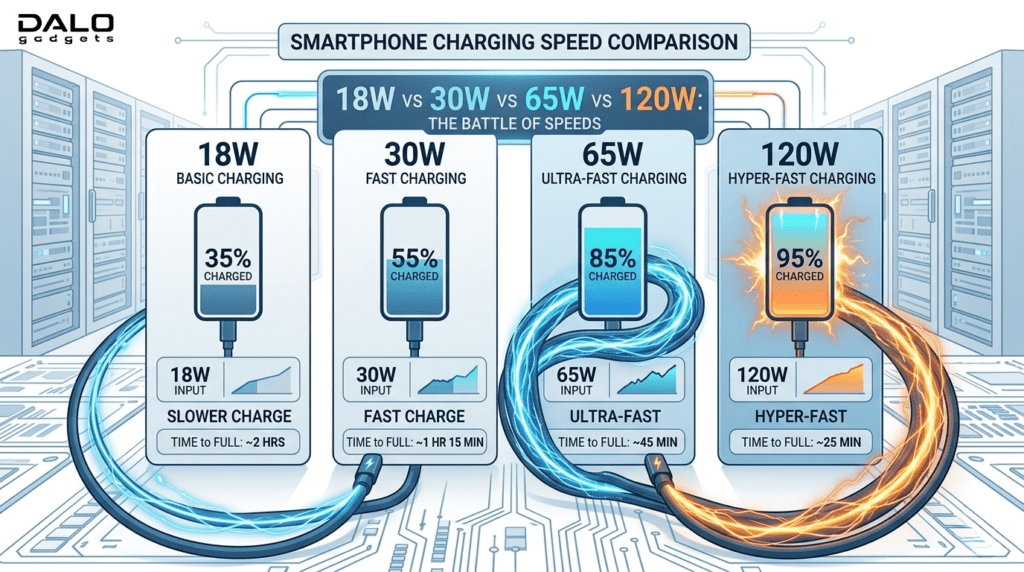
When you buy a smartphone with fast charging, consider these important factors.
Charging wattage
Higher wattage usually means faster charging.
Examples:
- 18W – basic fast charging
- 30W – good speed
- 65W – very fast
- 100W+ – ultra fast
Battery capacity
In our opinion, a phone with a 5000mAh battery + 65W charging is most ideal for use.
Charger included or not
Some high-end smartphone brands do not include chargers in the box; they usually include a data cable, so you have to purchase an adapter separately. Always check before buying a smartphone.
Charging standard compatibility
Universal standards like:
- USB Power Delivery
- Qualcomm Quick Charge
These are better because they work with multiple chargers.
Heat management
Look for phones with good thermal management systems to protect battery health.
What You Should Know Before Using Fast Charging
To keep your phone battery healthy, follow these best practices.
Use the original charger
Third-party chargers may not support proper fast charging protocols. So, you need to purchase from an authorized seller or shop.
Avoid overheating
Do not play heavy games while charging. It damages your mobile battery.
Remove phone case if overheating
Some thick cases trap heat during fast charging.
Do not keep the battery at 0% often
Try to charge when the battery reaches 20–30%.
Avoid overnight fast charging
Charging your phone slowly overnight is better for the battery in the long term.
Conclusion
Fast charging has completely transformed the smartphone experience. Instead of waiting hours for a full battery, Today’s devices can now recharge in minutes rather than hours.
Technologies like Quick Charge, VOOC, Dash Charging, Dart Charging, Rapid Charging, and Super Fast Charging all aim to solve the same problem – charging your phone quickly and safely.
However, each brand implements it slightly differently, using unique methods to manage power delivery, heat, and battery protection.
The most important things to consider are:
- Charging wattage
- Battery capacity
- Charger compatibility
- Heat management
If you choose a smartphone with a good fast charging system and follow proper charging habits, you can enjoy fast and convenient charging without harming your battery.
In today’s fast-paced world, fast charging is no longer a luxury – it’s a necessity.
Frequently Asked Questions (FAQ)
Is fast charging safe for smartphones?
Yes. Modern smartphones include battery protection systems that regulate temperature, voltage, and current.
Does fast charging damage the battery?
Over time, charging your phone again and again affects the battery. But modern fast chargers are designed to reduce damage to the battery.
Can I use another charger for fast charging?
Sometimes yes, but the fastest charging usually needs the original charger and cable. Some of the cheapest chargers damage your phone and its battery, or some of these cheap chargers cause blown phones. So always use the original charger.
Why does charging slow down after 80%?
Most smartphones charge fast at the beginning. When the battery reaches about 80–90%, the phone slows down the charging speed.
This happens because charging too fast to nearly 100% can create more heat and may damage the battery over time. By slowing down, the phone protects the battery and keeps it healthy for longer.
Which fast charging technology is the fastest?
Currently, technologies like Super VOOC and Ultra Dart charging can reach 150W or more, making them among the fastest available.