
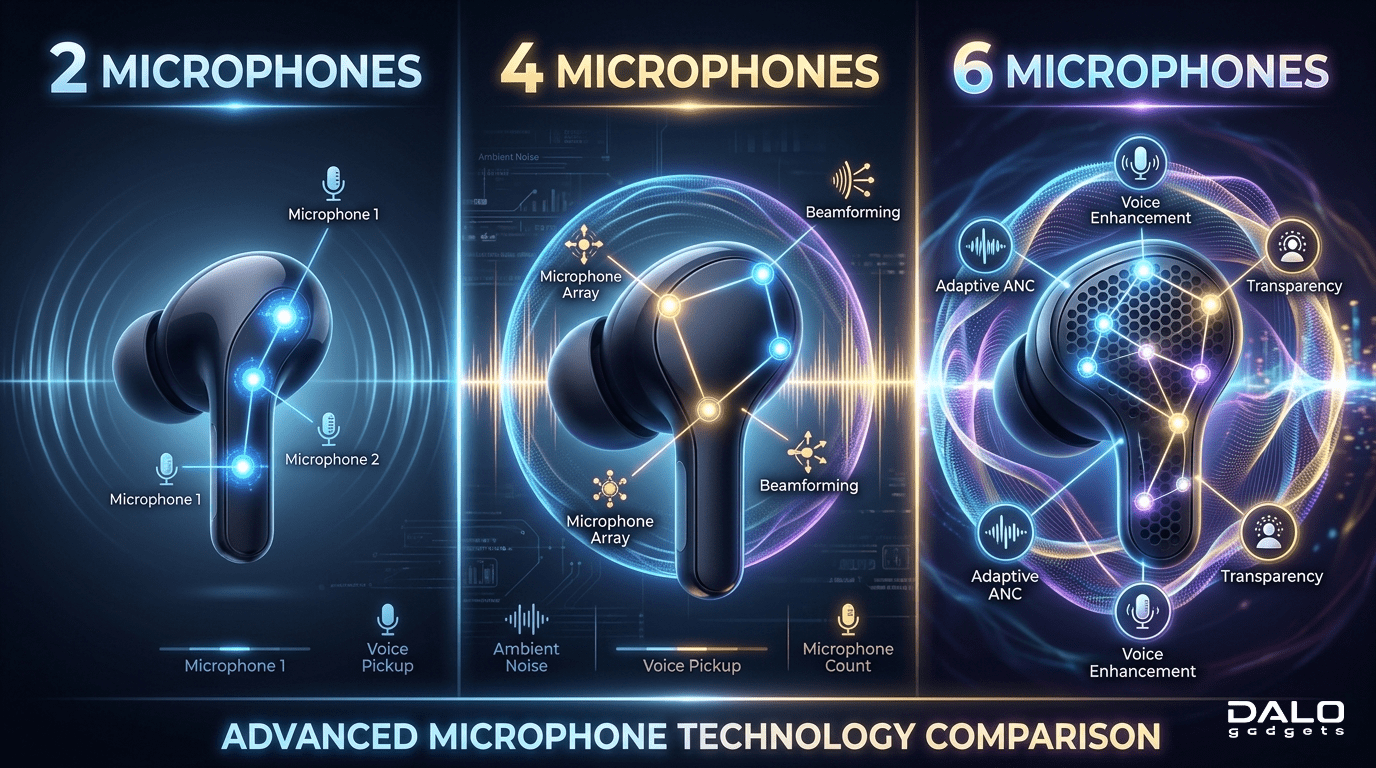
What are Dual Mic? Wireless earbuds and headphones have become smarter than ever. When you read product specifications, you will often see terms like Dual Mic, Quad Mic, or even 6 Microphones. Many buyers assume that more microphones automatically mean better sound quality or call performance, but that is not always the full story.
Microphones in earbuds and headphones mainly help with voice calling, noise cancellation, and voice assistant recognition. The number of microphones determines how effectively the device can capture your voice and reduce background noise.
In this detailed guide, we will explore what Dual Mic, Quad Mic, and 6 Mic systems mean, how they work, their history, their differences, and how to choose the right one when buying earbuds or headphones.
What Are Dual Mic, Quad Mic, and 6 Mic Systems?
Dual Mic Earbuds
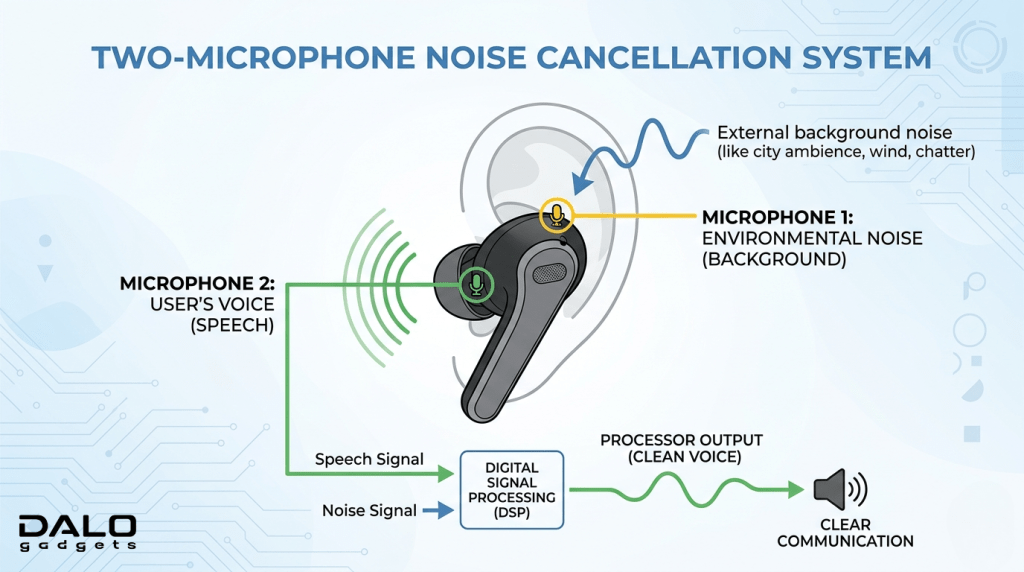
Dual mic earbuds contain two microphones, usually placed in different locations.
How They Work
One microphone captures your voice while the second microphone captures the surrounding environmental noise. The earbuds’ internal processor then compares both signals and filters out unwanted noise.
Common Uses
- Clear phone calls
- Basic noise cancellation
- Voice assistant commands
Dual mic systems are common in budget and mid-range earbuds.
Quad Mic Earbuds
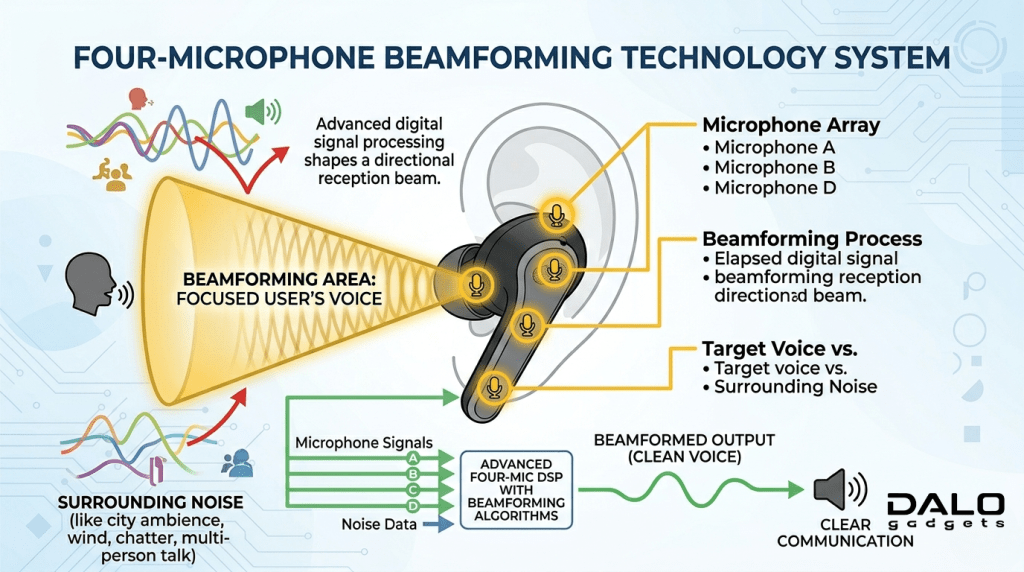
Quad mic earbuds contain four microphones, typically two microphones on each earbud.
How They Work
Two microphones focus on capturing your voice, while the other two monitor the surrounding noise. With more microphones, the earbuds can perform more accurate noise reduction and improve call clarity.
Common Uses
- Better voice pickup in noisy areas
- Improved ENC (Environmental Noise Cancellation)
- More stable voice detection
Quad mic setups are common in mid-range and premium earbuds.
6 Mic Earbuds or Headphones
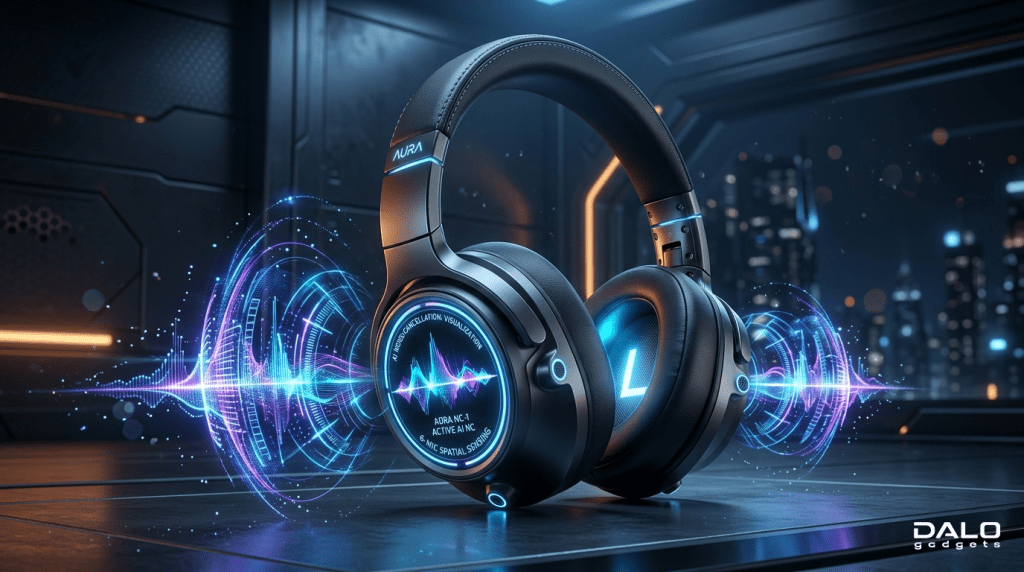
6 mic systems include six microphones distributed across both earbuds or headphone earcups.
How They Work
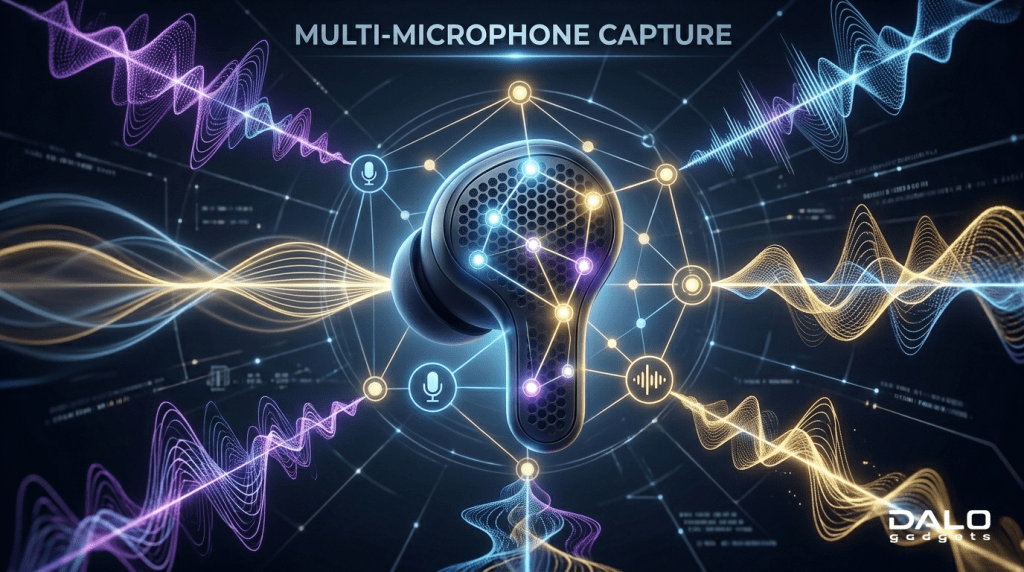
Multiple microphones constantly analyze sound from different directions. Advanced algorithms isolate your voice while removing traffic noise, wind noise, and crowd sounds.
Common Uses
- High-quality calls in noisy environments
- Advanced Active Noise Cancellation (ANC)
- Professional voice capture
These systems are usually found in premium earbuds and high-end headphones.
History and Background of Multi-Mic Technology
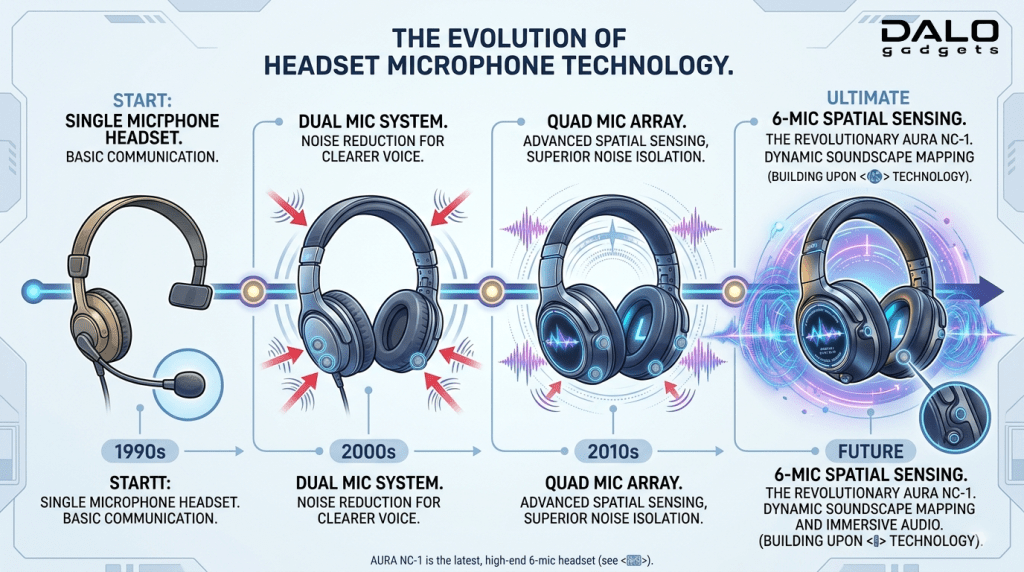
Microphones have been used in headphones for decades, mainly for telephone headsets and gaming communication. However, the concept of multiple microphones in tiny earbuds became popular only after wireless earbuds evolved.
Early Bluetooth headsets in the 2000s used a single microphone, which often resulted in poor call quality.
Later, manufacturers introduced dual microphone technology to improve voice clarity. As smartphones and voice assistants became more popular, companies started adding more microphones for better noise suppression.
Major improvements came with the rise of Active Noise Cancellation (ANC). ANC systems require microphones to analyze external noise and generate anti-noise signals. This pushed manufacturers to include quad and 6 mic arrays.
Today, many premium earbuds use AI-powered microphone processing, allowing them to isolate voices even in extremely noisy environments.
Types, Examples, and Real-World Uses

Dual Mic Setup
Typical Configuration
- 1 mic for voice pickup
- 1 mic for background noise detection
Common Example Use
You are on a phone call while walking on a street. The first mic captures your voice, and the second mic detects traffic noise so the processor can reduce it.
Performance Level
- Suitable for quiet or moderately noisy environments
- Decent call clarity
Quad Mic Setup
Typical Configuration
- 2 microphones per earbud
- Voice beamforming technology
Common Example Use
When you take calls in a crowded café, quad mics work together to isolate your voice from surrounding conversations.
Performance Level
- Stronger noise cancellation
- Clearer voice pickup
6 Mic Setup
Typical Configuration
- 3 microphones per earbud or earcup
- AI noise suppression algorithms
Common Example Use
In busy environments such as airports or public transport, 6 microphones analyze sound from different directions and filter out background noise.
Performance Level
- Excellent call clarity
- Advanced noise cancellation
Why Multiple Microphones Are Important
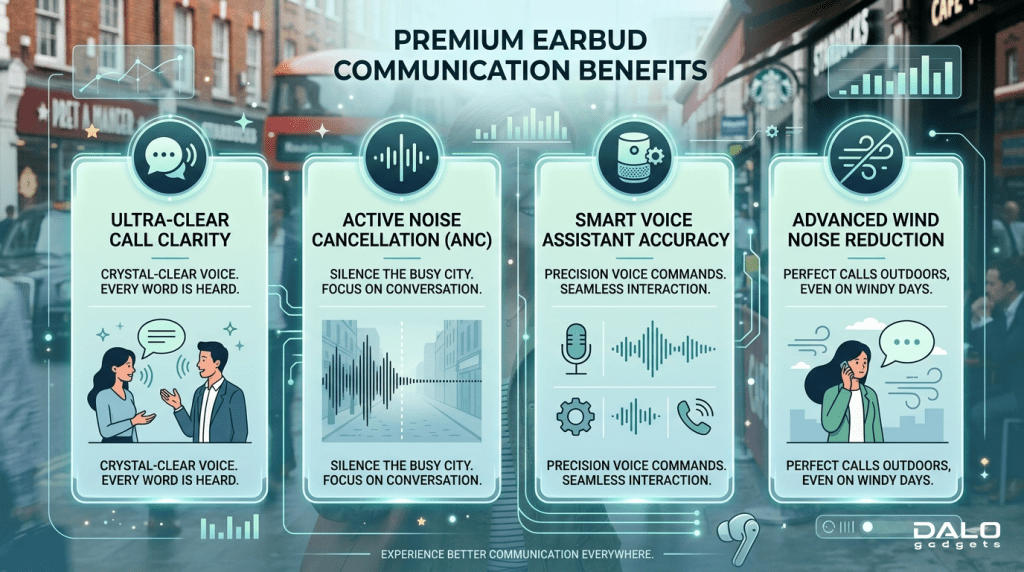
Multiple microphones significantly improve audio communication and listening experience.
1. Better Call Quality
More microphones allow the device to isolate your voice and reduce background noise during calls.
2. Improved Noise Cancellation
ANC technology relies on microphones to detect external noise and create an opposite sound wave to cancel it.
3. Voice Assistant Accuracy
Voice assistants require accurate voice detection. Multiple microphones ensure the device hears your commands clearly.
4. Wind Noise Reduction
Advanced mic arrays help reduce wind noise during outdoor calls.
5. Smart Audio Processing
Many modern earbuds use AI algorithms to analyze microphone input and optimize sound quality in real time.
Top 5 Earbuds with Advanced Microphone Systems
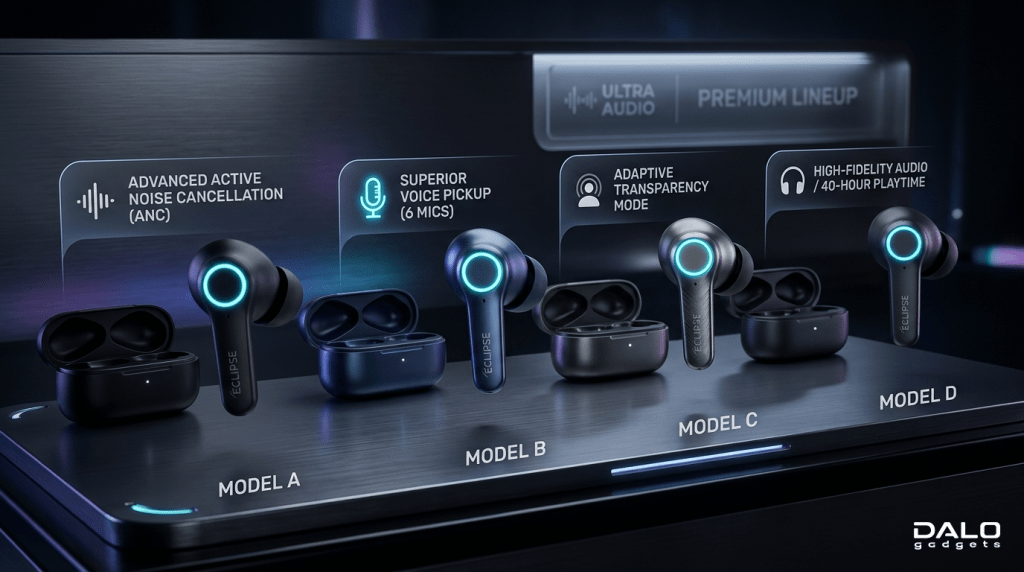
Here are some popular earbuds known for their strong microphone performance.
1. Apple AirPods Pro (2nd Generation)
- 6 microphone system
- Excellent call clarity
- Advanced ANC and transparency mode
2. Sony WF-1000XM5
- Multi-mic noise reduction
- AI-based voice pickup
- Industry-leading ANC
3. Samsung Galaxy Buds2 Pro
- Triple mic per earbud
- Voice detection technology
- Strong noise cancellation
4. OnePlus Buds Pro 2
- Triple mic system
- Smart noise cancellation
- Good call clarity
5. Nothing Ear (2)
- Multiple microphones
- Clear voice calls
- Stylish design with ANC
These earbuds use advanced mic arrays and noise-processing algorithms for clear communication.
Advantages and Disadvantages of Multiple Microphones
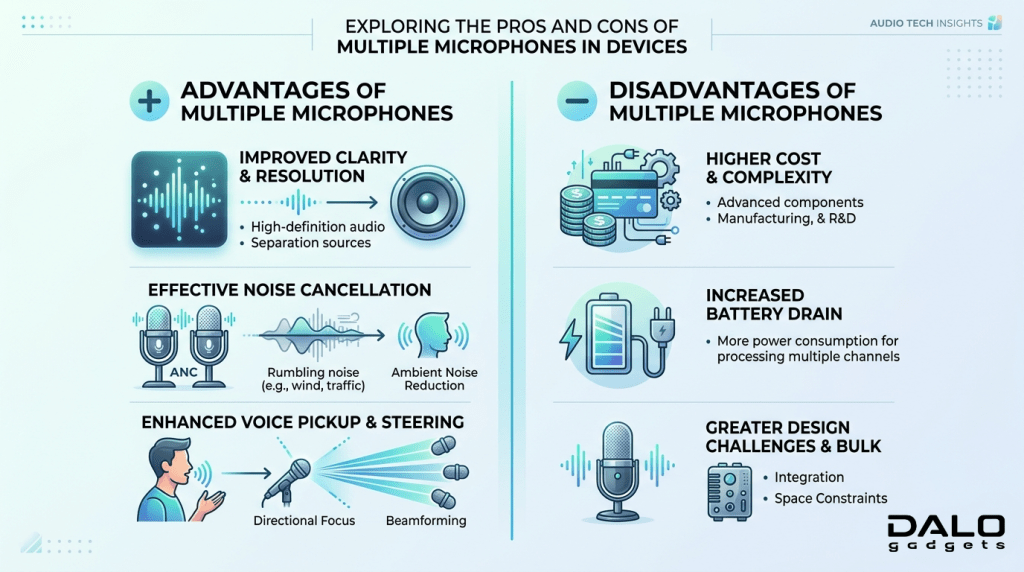
Advantages
1. Clear Voice Calls
Multiple microphones improve voice clarity during phone calls.
2. Stronger Noise Cancellation
More microphones allow better detection of surrounding noise.
3. Better Voice Assistant Performance
Commands are recognized more accurately.
4. Improved Outdoor Calls
Wind noise reduction works better with multiple microphones.
Disadvantages
1. Higher Cost
Devices with more microphones are usually more expensive.
2. Increased Power Consumption
More microphones require additional processing power.
3. Marketing Confusion
Sometimes brands advertise many microphones even when real performance improvement is minimal.
Buying Guide How to Choose the Right Microphone Setup

When buying earbuds or headphones, do not focus only on the number of microphones. Consider these factors:
1. Check Noise Cancellation Technology
ANC and ENC performance often matter more than microphone count.
2. Look for AI Noise Reduction
Many modern earbuds use AI to improve call quality.
3. Read Real User Reviews
Actual call performance is best judged through user feedback.
4. Consider Your Usage
- Office calls: Dual or Quad mic is enough
- Outdoor calls: Quad or 6 mic system is better
- Professional meetings: Go for premium multi-mic earbuds
5. Test Voice Clarity
If possible, test the earbuds’ call quality before buying.
Conclusion
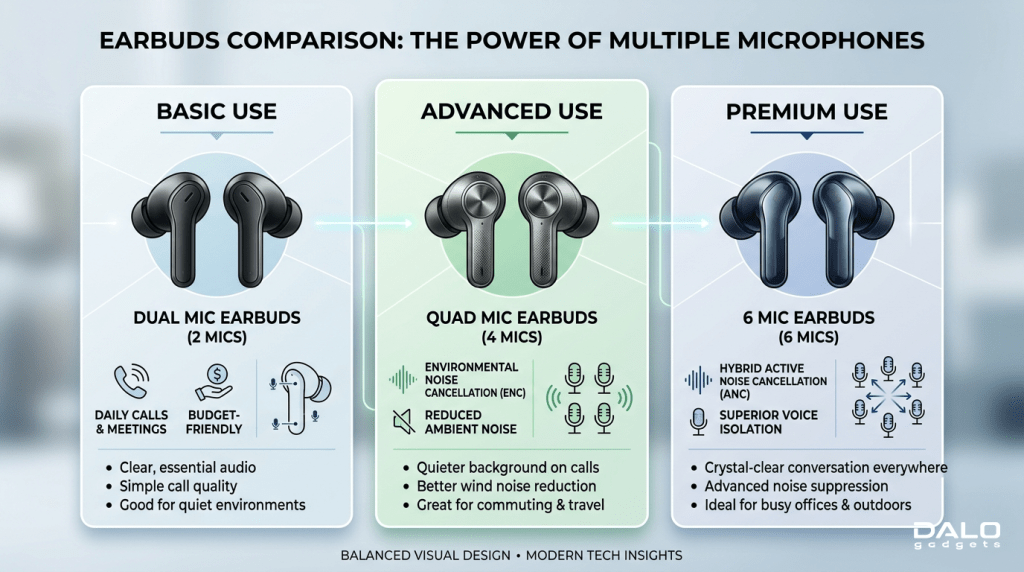
Microphone technology in earbuds and headphones has evolved significantly over the years. From simple single-mic headsets to advanced quad and 6 mic systems, manufacturers continue improving voice clarity and noise cancellation.
Dual mic setups provide basic noise reduction, quad mic systems offer better voice isolation, and 6 mic arrays deliver premium call clarity even in noisy environments.
However, the number of microphones is only one part of the equation. Software algorithms, microphone placement, and noise-cancellation technology are equally important.
When buying earbuds or headphones, focus on real-world performance rather than just microphone count. If you frequently take calls in noisy places, choosing earbuds with advanced multi-mic systems and AI noise reduction can make a noticeable difference.
In short, understanding microphone technology helps you make a smarter buying decision and enjoy clearer communication wherever you go.
FAQ Section
Do more microphones always mean better call quality?
Not necessarily. Software processing and microphone placement also play a huge role.
Are 6-mic earbuds better than quad-mic earbuds?
In most cases, yes. However, performance also depends on the audio processing technology used.
Is a dual mic enough for normal use?
Yes. Dual mic earbuds are usually sufficient for casual calls and everyday use.
Do microphones affect music quality?
No. Microphones mainly affect call quality and noise cancellation, not music playback.
Do gaming headsets use multiple microphones?
Some gaming headsets use multiple microphones or advanced noise suppression for clear communication during gameplay.